On this page
What's next



Start Your Free Debt Relief Consultation
Love on a Budget: Are Americans too broke to date?
•
•
Dating has always come with a price tag, but for many Americans, that price is starting to feel increasingly high. With living costs continuing to rise and wages struggling to keep up, simply going out for dinner, drinks, or a movie is becoming a source of financial anxiety for some.
To explore the cost of modern romance, we surveyed 1,538 U.S. adults on a range of topics related to dating and finances. The study examined areas including average spending on dates, expectations around paying, financial barriers, and attitudes toward dating in 2026.
Key findings
- The average American spends $93 on a first date, and expects their date to spend almost exactly the same amount back ($92).
- More than three in five daters (60.1%) believe that spending expectations around dates are higher now than they were in the past.
- The vast majority of Americans (86%) say that money concerns have caused them to delay dating or re-entering the dating world on at least one occasion.
- Almost three in ten people (29.5%) have turned down a date because they couldn’t afford it, while 85.7% have turned down a second date because they felt they didn’t align financially with the other person.
- Most people (87.3%) have canceled at least one date as a direct result of financial pressures.
- Among those who aren’t currently dating, 13.7% say they would like to date but simply can’t afford to.
- Almost half of active daters (48%) say concerns about money have sometimes knocked their confidence when it comes to pursuing romantic relationships.
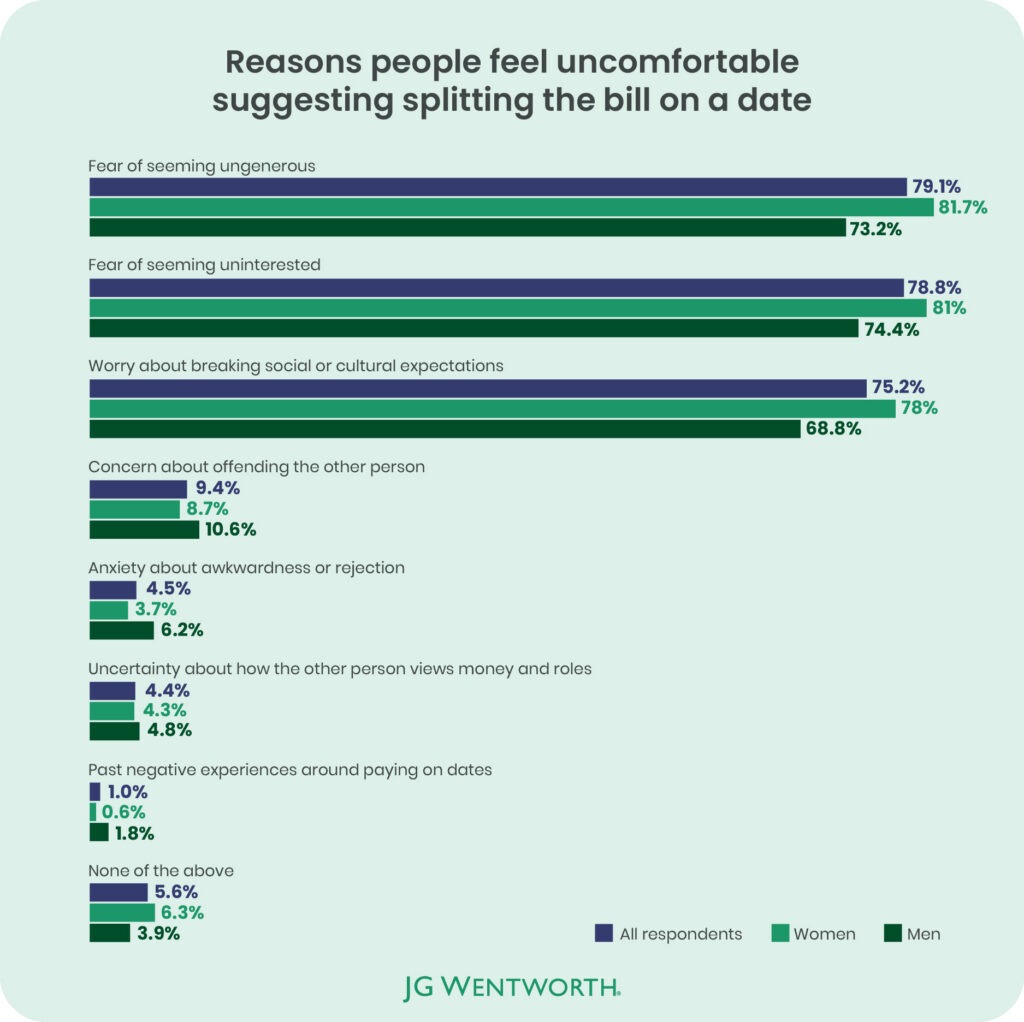
- The vast majority of people (92.3%) have felt uncomfortable suggesting splitting the bill on a first date, most commonly out of fear of seeming ungenerous (79.1%) or uninterested (78.8%).
The average spend on a first date
Among those who are currently dating or in a relationship, the average amount people spend on a first date is $92.91. Around three-quarters (75.1%) say they spend between $91 and $150 on a first date, with the highest proportion (38.9%) spending between $91 and $100. 17.8% of people said they would spend $50 or less on a first date on average.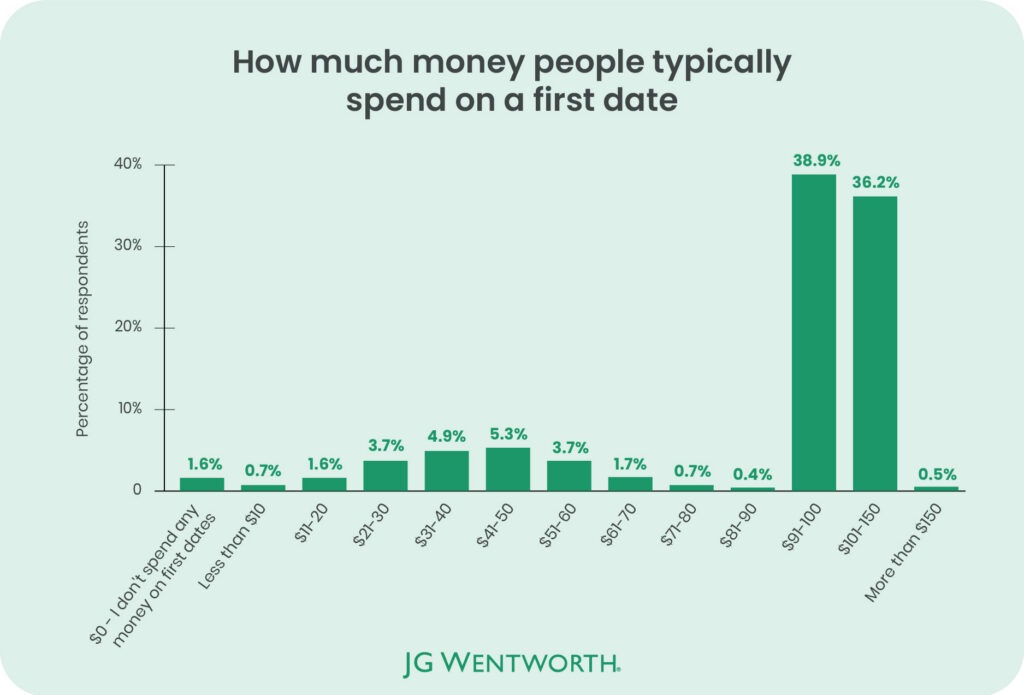
People expect their date to spend $92 on the first date
As well as asking how much people typically spend themselves on a first date, we also asked how much people would expect their date to spend. The result was extremely similar, with people expecting their date to spend an average of $92.04 on the first date.
The majority of daters (60.1%) believe that expectations around spending money on dates are higher now than they were in the past.
Most people would hesitate if a date were to cost more than $100
While most respondents seem aligned on how much they would be willing to spend on a date, many would draw the line if a date seemed like it would be too expensive.
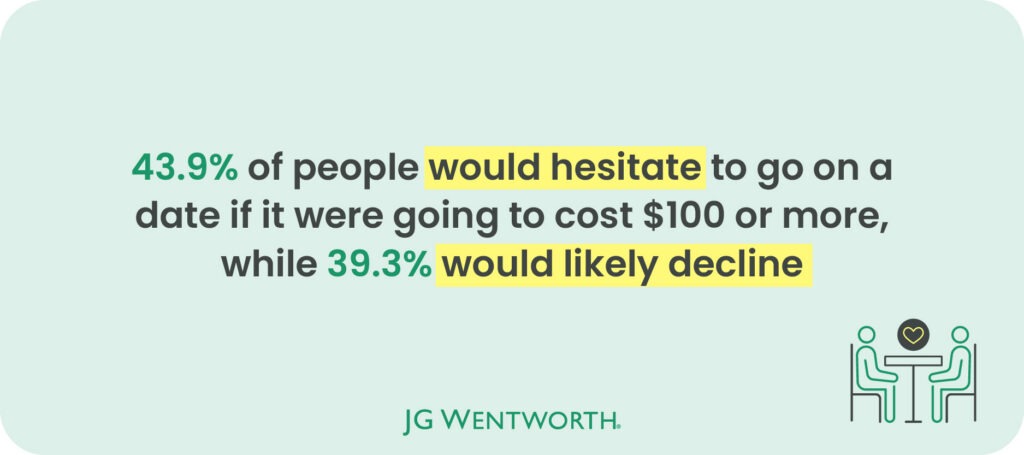
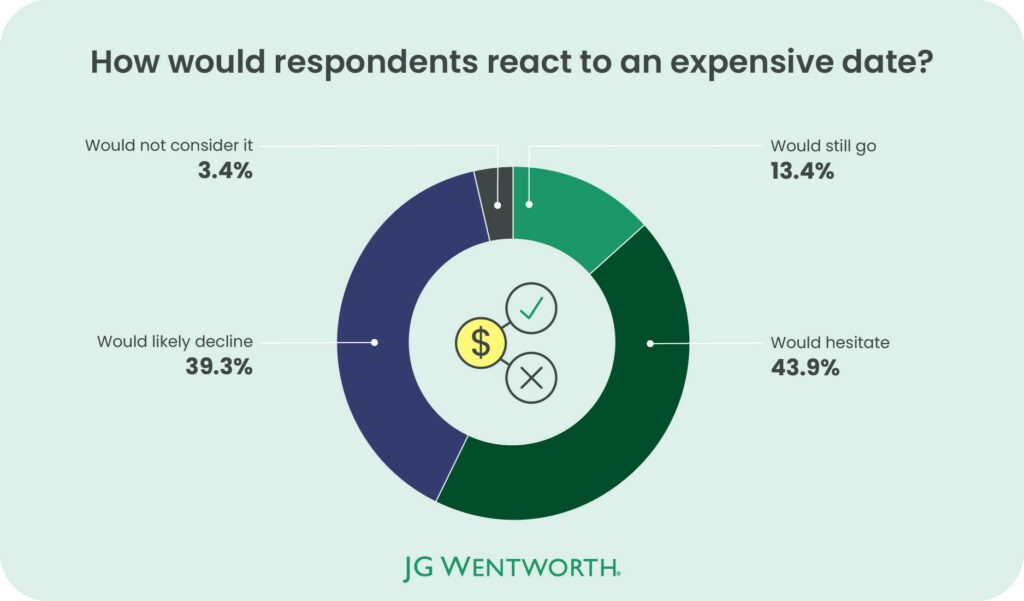
Respondents were asked whether, if a date were likely to cost $100 or more, they would still be happy to go on the date. Only 13.4% of people said they would definitely still go on the date, while 43.9% said it would make them hesitate. Around four in ten (39.3%) said they would most likely decline to go on the date, and 3.4% would not even consider going.
Preferred first date activities
There are many options for first date activities, and some can be a lot more costly than others. The most popular activities among our respondents were fairly low-cost, including grabbing a drink at a bar (37.5%), having a board game night (35.5%), and taking a walk in the park (8.2%).
Only 3.9% said they would opt for an expensive dinner at a fancy restaurant, suggesting that the classic dinner date has fallen out of favor with today’s daters. It seems that most daters would prefer a shorter first date with less commitment before investing emotionally and financially in the other person.
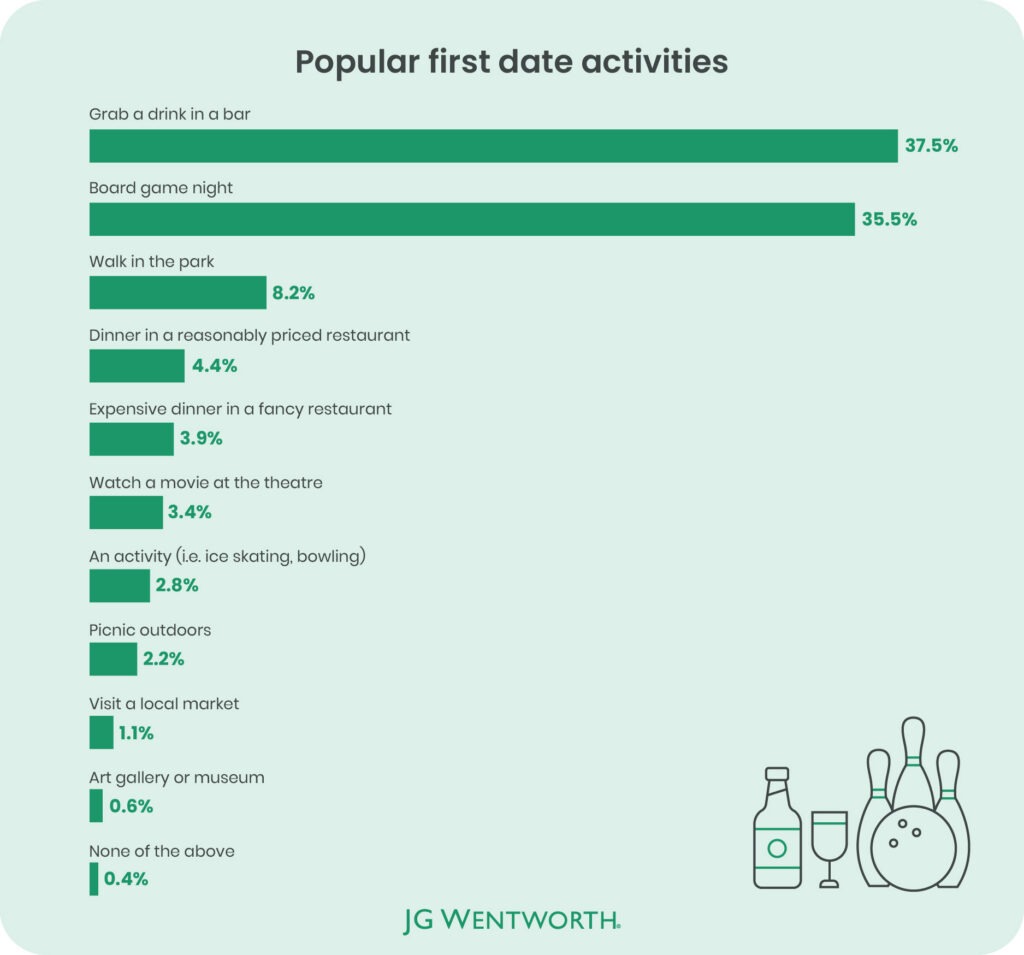
With less costly date activities seemingly becoming more popular, 89.1% of people even say they have suggested a cheaper date option because they couldn’t afford a more expensive activity.
Financial pressure around dating
Among people who are currently dating, almost half (48%) said that concerns about money sometimes impacted their confidence in pursuing romantic relationships; 8.7% said that this affected them very often.
As our previous study showed, money can cause big issues with loved ones; 46.6% of people who had lent money to or from family members or friends had experienced serious arguments or conflicts as a result.
Other research found that 44% of single Americans believe their net worth influences their ability to date, and more than one in four have canceled dates due to financial pressure. [1]
The majority of people (71.6%) said they rarely felt financial pressure to spend more than they can comfortably afford when dating, but 14.2% said they sometimes feel this pressure.
Alongside feeling this pressure, 82.8% of people said they had gone into debt through a credit card or buy-now-pay-later scheme due to dating-related expenses.
Financial issues are causing people to avoid dating
Among all respondents, 86% said that concerns about money had caused them to delay starting to date or re-entering the dating world on at least one occasion.
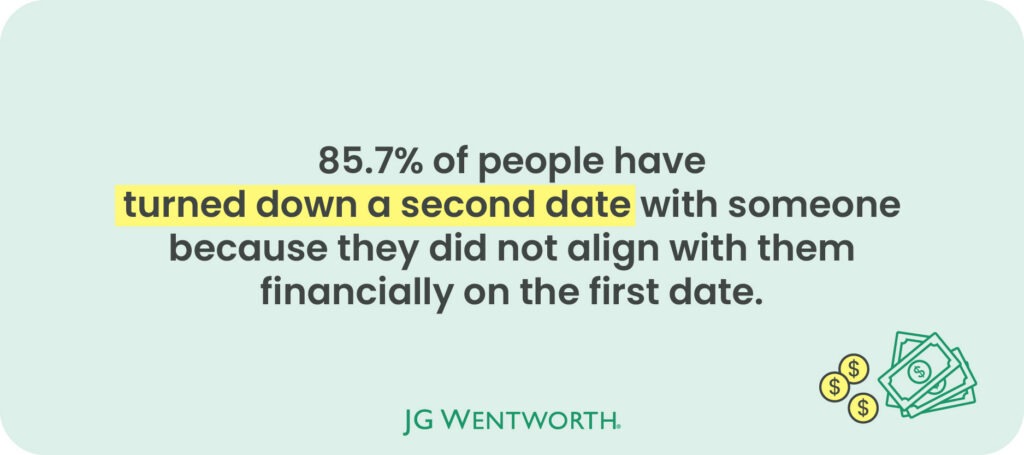
Around three in ten people (29.5%) have turned down a date specifically because they could not afford it, and 85.7% had turned down a second date because they did not align with the other person financially.
More than nine in ten people actively dating (91.5%) say that they have held off suggesting a date because they didn’t want to be financially responsible for paying for it, though 86.9% said this had only happened on one occasion.
Of those who are not currently in a relationship or actively dating, 41% said that finances were at least part of the reason, and 13.7% said they would like to date but can’t afford to. 39.6% of this group even said that if they met someone they liked, concerns about money would make them hesitant to ask them on a date.
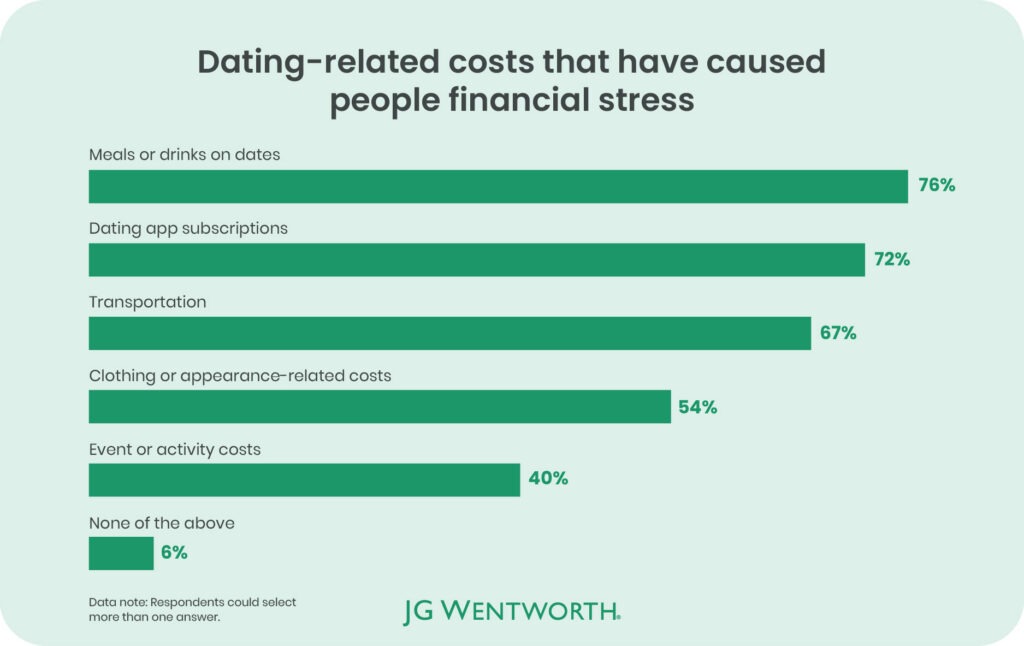
The cost of meals and drinks on dates have caused financial stress for three-quarters of people
When asked about the different dating-related costs that have caused financial stress, 76% of people said the cost of meals and drinks had caused them stress, while the cost of dating app subscriptions caused financial stress for 72%.
Most people have canceled a date due to financial pressures
For many people, the financial pressure associated with dating has even led them to cancel their plans. The majority, 87.3% of people, say they have canceled a date as a result of financial pressures, with 7.2% saying they have done this on more than one occasion.
| Have you ever canceled a date due to financial pressures? | Percentage of respondents |
|---|---|
| Yes, on one occasion | 80.10% |
| Yes, on more than one occasion | 7.20% |
| No | 12.70% |
Some people are dating just to get free meals
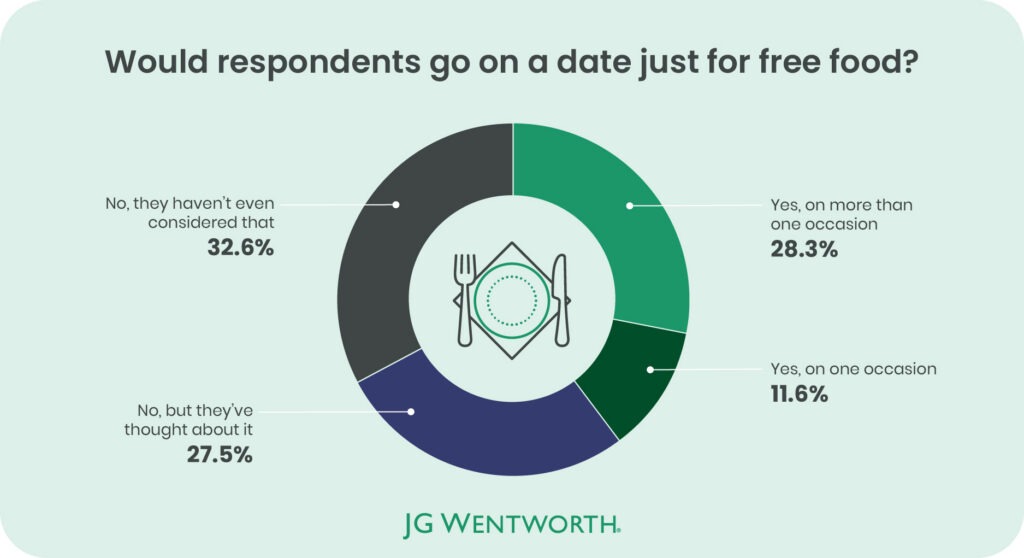
Perhaps more reflective of wider economic pressures, four in ten (39.9%) of people say they have gone on a date to get a free meal on at least one occasion. Just over a quarter (27.5%) say they have never gone on a date just to get a free meal, but they have considered it.
Another study, from Intuit, found that younger people are more likely to go on dates primarily for a free meal, with Gen Zers being the most prolific in this behavior (31%).
These activities are being referred to by some as “foodie calls,” with a number of TikTok videos being posted by people who are setting up dates because they don’t want to prepare or pay for their own meals. [3]
Splitting the bill on a date
Splitting the bill can often be awkward on a first date; things like societal expectations and financial differences can impact how people decide to split payment. Of those who are currently dating, the highest proportion (38.8%) said that they prefer to pay for the date in full. A third (33.7%) said they prefer to split the bill with their date, and just over a quarter (27.4%) said that their date will usually pay.
Who is responsible for paying on a first date?
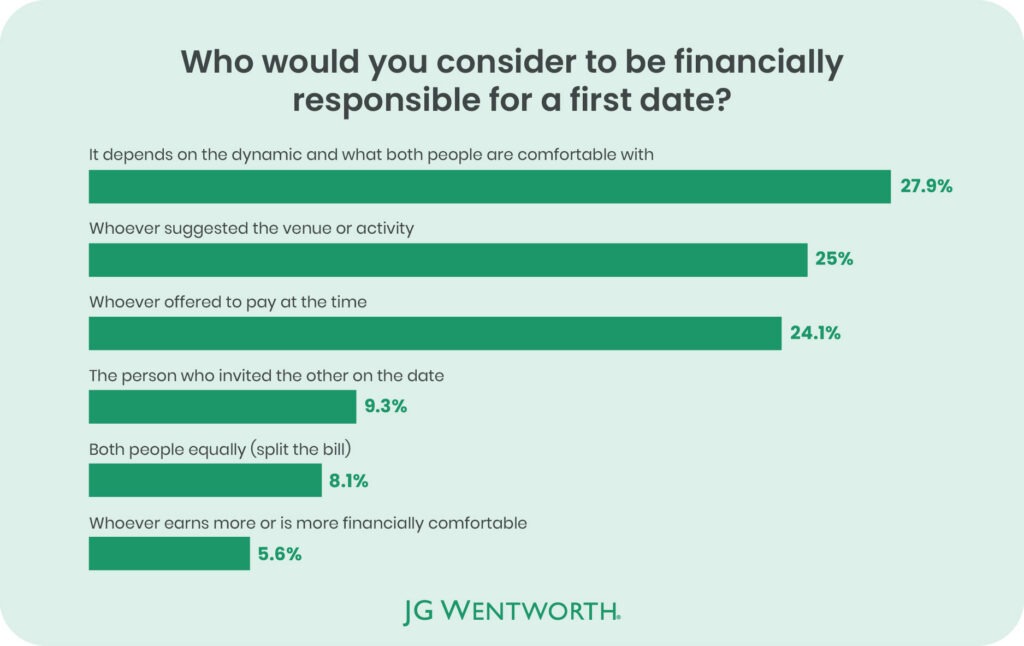
Everyone has their own expectations when it comes to who pays on a first date, but it seems people are often happy to meet in the middle. 27.9% of daters said who pays the bill would depend on the dynamic and what both parties are comfortable with. A quarter (25%) think the person who suggested the date should pay, and 24.1% said that whoever offers to pay at the time should take the responsibility.
Only 5.6% think that the person who earns more should be responsible for paying, suggesting that different levels of earnings don’t factor into the decision in most cases.
Most people have felt uncomfortable suggesting splitting the bill
The vast majority of people currently dating or in a relationship (92.3%) say they have felt uncomfortable suggesting splitting the bill on the first date on at least one occasion.
For those who had felt uncomfortable suggesting splitting the bill, there were several reasons why. The most common reasons people felt they didn’t want to suggest splitting the bill were a fear of seeming ungenerous (79.1%) and a fear of seeming uninterested (78.8%). This was followed by worry about breaking social or cultural expectations (75.2%), though this reason was slightly more common among women (81%) than men (74.4%).
Around one in ten people (9.4%) felt concern about offending the other person by suggesting they split the bill, and this reason was slightly higher among men (10.6%) than women (8.7%).
Methodology
The survey was conducted in March 2026 and asked 1,538 U.S. adults a range of questions and dating and money. Topics included average amount spent on dates, etiquette around finances when dating and financial barriers to dating in 2026.
For some questions, respondents were able to select multiple answers, therefore the results do not all add up to 100%.
The demographics of the survey were:
Age:
- 18–28 – 23.9%
- 29–44 – 67.6%
- 45–60 – 6.7%
- 61–79 – 1.8%
- 80+ – 0.1%
Gender:
- Male – 31.9%
- Female – 67.9%
- Non-binary – 0.1%
- Prefer not to say – 0.1%
Sources
[1] Moneywise, ‘44% of single Americans feel their net worth impacts their love life. Here are the 3 most attractive financial traits to help you lock down a date’, 2026
[2] Intuit, ‘The Cuffing Economy: How Gen Z is Redefining Love and Money’, 2025
[3] USA Today, ‘They’re dating for dinner. And they’re not alone’, 2025

About the author