On this page
What's next




Earn a high-yield savings rate with JG Wentworth Debt Relief
Why Is a Lender Asking to Connect to My Bank Account?
•
•
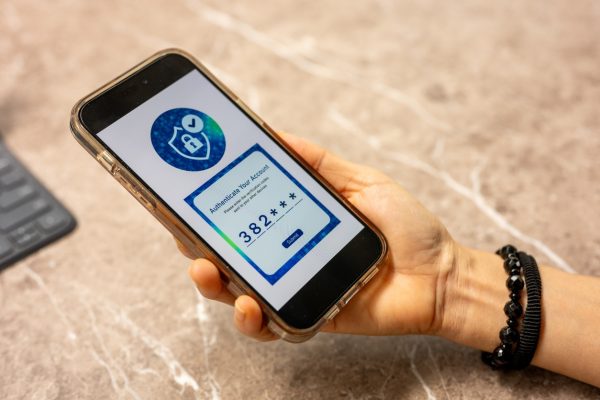
You are applying for an unsecured personal loan or a similar online installment loan. You may have already been pre-qualified. Then the lender asks you to connect your bank account.
That can feel like a big step, especially if money is tight and you thought the application was almost finished.
The short answer is that lenders may ask for bank-account access for bank verification, cash-flow review, or both. Bank verification helps confirm that the account is real, active, belongs to you, receives income, and can be used to send funds or process repayment. Cash-flow review helps the lender understand your recent deposits, recurring income, balances, and obligations to evaluate whether the loan appears affordable for you and how likely you are to repay.
This article focuses on unsecured personal loans and similar online installment loans. It is not about mortgages, auto loans, secured loans, or home-equity products, which can involve different rules, documents, collateral, and underwriting requirements.*
For borrowers with bad credit, this extra information can sometimes help. A credit report mostly reflects past borrowing behavior, while bank data may show what is happening now: recurring income, steady deposits, fewer recent overdrafts, or enough cash flow to support a payment. That does not guarantee approval, but it may give some lenders more information to consider than a credit score alone.
First, Separate the Credit Check From the Bank Check
Three different checks can happen during the same online loan application. They are related, but they are not the same thing.
| Step | Main question | What it may check |
|---|---|---|
| Credit check | What does your credit history show? | Credit score, past payments, collections, current debts, recent credit activity |
| Bank verification | Is this a real, active account that belongs to you and can be used for the loan? | Account ownership, active status, routing/account details, income deposits, funding destination, repayment account |
| Cash-flow review | Does your recent bank activity suggest the payment is affordable for you and likely to be repaid? | Recurring income, deposit consistency, average balances, recurring bills, debt payments, overdrafts, returned payments, available cash flow |
Connecting your bank account is not itself a credit pull. A lender may still run a soft credit check, hard credit check, or alternative credit review separately. Before you submit or accept an offer, check what the lender says about credit inquiries. A soft inquiry generally does not affect your credit score. A hard inquiry may.
Can Bank Verification Help If You Have Bad Credit?
Sometimes, yes. If your credit score is low because of older missed payments, collections, or limited credit history, a lender that also reviews bank-account activity may get a more current view of your situation.
That can matter if your account shows recurring income, steady deposits, and enough room after regular bills to support a payment. It does not mean bad credit stops mattering. It means the lender may have more to evaluate than a score alone.
If you are comparing options with imperfect credit, it may also help to understand how same-day personal loans for bad credit work and why guaranteed approval is not realistic for legitimate unsecured loans.
Apply for a personal loan
Apply for a personal loan
Why Lenders Ask for Bank Account Access
Lenders may ask for bank-account access for several reasons, and more than one may apply at the same time. The cleanest way to think about it is this: bank verification helps confirm the account and information you provided; cash-flow review helps evaluate the loan against your current financial activity.
To verify the account and income
A lender may need to confirm that the bank account is open, active, and connected to you. It may also want to confirm that the income you reported on the application actually shows up in the account.
Avant says the fastest way to verify income and employment is often through its online verification tool, and its verification materials say it may assess identity, employment, income, and bank-account details. Best Egg has described verifying a bank account, income, or employment by analyzing bank transactions with the customer’s consent. [1][2][3]
To reduce fraud and confirm funding details
The lender also wants to know that the account belongs to the applicant and that approved funds will be sent to the right place. That is partly about convenience, but it is also about preventing fraud.
Prosper says a bank connection may help confirm an account in the applicant’s name, regular deposits, and a cash-positive balance. MoneyKey and CC Flow say bank verification helps verify identity and income and ensures funds are sent to the correct bank account if approved. [4][8][9]
To evaluate affordability and repayment risk
Affordability and underwriting are related, but they are not identical. Affordability asks whether your income and regular expenses leave enough room for the payment. Underwriting asks how likely you are to repay as agreed, and what amount, price, or terms make sense for the lender.
Bank data can help with both. It may show recurring income, average balances, regular bills, existing debt payments, overdrafts, returned payments, and other patterns that help the lender evaluate whether the loan fits your current financial picture.
A note on “ability to repay”
You may see lenders or regulators use terms like “ability to repay,” “ability to pay,” or “affordability.” Be careful with the legal meaning. The federal Ability-to-Repay / Qualified Mortgage Rule applies to residential mortgage loans, not every unsecured personal loan. The CFPB’s Payday Lending Rule covers payday loans, vehicle-title loans, and certain high-cost products, but the CFPB revoked the rule’s mandatory underwriting provisions in 2020; the payment-withdrawal protections remain. [15][16][17]
So in this article, “ability to repay” is being used in the plain-English sense unless stated otherwise: the lender may be reviewing whether your income, expenses, and account activity suggest the loan can be repaid.
What If You Were Already Pre-Qualified?
Pre-qualified usually does not mean fully approved. It usually means you passed an early screen based on basic application information, credit-related data, reported income, partner criteria, or some combination of those inputs.
“Pre-qualifying a loan is just an initial view, whereas verifying a bank connection happens next because lenders want to see proof of real cash flow,” says Tim Gaasch, Vice President of Account Management at Clever Offers. “A borrower may be able to get pre-qualified using credit reports and reported income, but that does not confirm whether there is truly enough money moving through the borrower’s account.”
That is why a lender may ask for bank verification after pre-qualification. You may have passed the first screen, but the lender may still need to confirm income, account ownership, cash flow, or ability to repay before making a final decision.
What Lenders May Actually Be Looking At
When a lender asks you to connect your bank account, it may not be looking at your account the way a person would read a bank statement line by line. In many cases, bank data is organized into signals that are easier to use in a lending decision.
Those signals may include recurring income, deposit consistency, average balances, account ownership, recurring bills, existing debt payments, overdrafts, insufficient-funds activity, and available cash flow after regular obligations.
Gaasch says lenders commonly review the last 60 to 90 days of transaction history for signals like recurring paycheck deposits, average daily balances, overdrafts, and NSF fees. “This method of underwriting is very much like a type of cash-flow analysis versus the typical form of credit analysis,” he says.
Plaid describes cash-flow underwriting as using income and expense data to inform approval or denial decisions, including income, expenses, payments, and bank balances. Plaid also notes that direct-deposit data can help confirm employment, pay frequency, and income regularity. Nova Credit says Cash Atlas analyzes bank transaction data into attributes, reports, and scores to help assess affordability and ability to pay; its consumer support page says it may provide income, debt, expense, and asset attributes. Pave also describes cash-flow analytics used in lending decisions. [10][11][12][13]
In plain English, the bank connection can turn raw transaction history into information a lender can use: how regular your income is, how much usually stays in the account, whether payments are often returned, and whether another loan payment appears to fit your current cash flow.
Examples of How Lenders Explain Bank Verification
Different lenders describe this step in different ways. A few examples:
- Best Egg has described verifying a bank account, income, or employment by analyzing bank transactions with the customer’s consent. [3]
- Avant says applicants must provide income-source information and that an online verification tool may be the fastest way to verify income and employment. Avant also says the verification process may include identity, employment, income, and bank-account details. [1][2]
- Prosper says applicants may be asked to connect a bank account to confirm their financial picture, including an account in their name, regular deposits, and a cash-positive balance. [4]
- OppLoans describes automated bank verification as a read-only snapshot of recent banking transactions that helps verify identity and financial information. [5]
- CreditNinja says instant bank verification can confirm income, speed the approval process, and help deliver funds; its disclosures also discuss transaction data for identity and ability-to-repay verification. [6][7]
- MoneyKey and CC Flow say bank verification helps verify identity and income and ensures funds are sent to the correct account if approved. [8][9]
These examples show why the bank step can feel similar from lender to lender but serve more than one purpose: verification, fraud prevention, funding, cash-flow review, or some mix of those functions.
Is It Safe to Connect Your Bank Account?
It can be safe when you are working with a legitimate lender or a trusted verification provider, but it is still worth slowing down.
Many lenders use open-banking technology providers to make the process faster and more secure. Plaid says 72% of surveyed U.S. loan applicants were comfortable sharing cash-flow data with lenders. Providers such as Plaid, Finicity, Yodlee, and others commonly support permissioned bank connections in lending and financial services. [10]
“Applicants should understand what authority they are providing, how long access will last, and whether the lender is collecting historical transaction activity or asking for broader account control,” Gaasch says.
That distinction matters. Read-only access for underwriting is different from authorizing withdrawals or repayment from your account. Before you agree, read the screen and make sure you know what you are authorizing.
How to Tell If It Is Legitimate or a Scam
A real lender asking for bank verification can be normal. A scammer asking for bank information can be dangerous.
Signs the request may be legitimate:
- The company clearly identifies itself as a lender, marketplace, or verification provider.
- The site explains why bank verification is needed.
- The page uses secure browsing and provides privacy terms.
- The lender shows rates, fees, repayment terms, and required disclosures.
- The lender explains whether the application may involve a soft or hard credit inquiry.
- The authorization screen explains what data will be accessed.
Red flags:
- The site guarantees approval before reviewing your information.
- You are asked to pay an upfront fee to receive the loan.
- The site is vague about whether it is a lender or a matching service.
- You cannot find clear loan terms, contact information, or privacy disclosures.
- You are pressured to act immediately.
- The company does not explain how your information will be used or shared.
This caution matters because consumer financial information can be misused. In 2022, the FTC announced an action against a lead-generation company that allegedly collected sensitive loan-application information from consumers under the guise of connecting them with lenders and then shared the information more broadly than consumers expected. [14]
How This Differs From Cash Advance Apps and Loan-Matching Sites
Cash advance apps and online lenders can both review bank activity, but they may use it differently. A cash advance app may rely mostly on deposit history and cash flow to decide whether to offer a small advance. An online unsecured personal-loan lender may combine bank data with a credit review, alternative credit data, or other underwriting inputs. For more on that tradeoff, see What Is the Real Cost of a Cash Advance?.
Loan-matching sites are different again. A lender makes or arranges the credit decision. A loan-matching site, lead generator, or marketplace may collect your information and share it with lenders or partners to try to find a match. That can be useful, but you should understand who is collecting your information, who may receive it, and what happens after you submit.
Tips Before You Connect Your Bank Account
- Use the account that best shows your income: Connect the account where your main income or direct deposit appears. If you connect a secondary account with little activity, the lender may not see the income pattern it needs to verify.
- Make sure the account is in your name: The lender may need to confirm account ownership. Using someone else’s account can cause delays or a decline.
- Check whether you are authorizing viewing, repayment, or both: Bank verification and repayment authorization are not the same thing. One may allow a read-only view of account information. Another may authorize ACH payments from the account.
- Know that recent activity may matter: If the lender is reviewing cash flow, it may notice deposit consistency, balances, overdrafts, returned payments, recurring debts, or other obligations.
- Review the loan terms before accepting: Before accepting an offer, review the APR, fees, payment amount, repayment schedule, whether payments may be reported to credit bureaus, and whether accepting triggers a hard credit inquiry.
For a broader checklist, see What Documents Do You Need for a Personal Loan? and Understanding Credit Scores.
Think This Type of Loan May Be Right for You? Here’s How We Can Help
If you have considered this information and still think a loan may be the right fit, we can help you explore options that may fit your needs. Answer a few questions and compare products based on your situation, including loans, cash advances, credit builders, and other offers.
In general, smaller-dollar needs where speed matters most may be more likely to match with cash advance options or small-dollar loans, while larger needs may be better served by personal loans or other products. If you want to learn more about cash advances specifically, you can also go directly to our cash advance marketplace.
Before moving forward with any offer, review the terms carefully, including the APR, repayment schedule, fees, credit-check language, and whether the lender will need to verify your bank account before final approval.
Frequently Asked Questions
Usually to verify income, confirm account ownership, reduce fraud, review cash flow, support underwriting, and send funds if you are approved.
No. Connecting your bank account is not itself a credit inquiry. A bank connection may help verify income, identity, account ownership, or cash flow. A credit check is separate and looks at credit history. Some lenders may do both in the same application.
No. It usually means the lender is continuing the review. You may still need to meet income, identity, credit, and ability-to-repay requirements.
It depends on the provider and what you authorize. Some processes provide a read-only view or structured report based on recent transaction data. Others may request documents such as bank statements. Always read the authorization language before agreeing.
It can help in some cases because it may show current income and cash-flow patterns that a credit score does not fully capture. It does not guarantee approval, and lenders may still consider credit history, income, obligations, and other risk factors.
Some lenders may allow other forms of verification, such as pay stubs, tax returns, or bank statements. Others may require online verification to continue. If you are uncomfortable, pause and look for the lender’s privacy policy, verification terms, and customer-support options before proceeding.
The Bottom Line
Being asked to connect your bank account can feel nerve-wracking. That reaction makes sense.
But in online unsecured lending, the request often has a practical purpose. The lender may be trying to verify income, confirm identity, check account ownership, review cash flow, prevent fraud, and make sure funds go to the right account.
The key is to understand what is happening. A bank connection is different from a credit pull. Bank verification is different from cash-flow review. A lender is different from a loan-matching site.
If the company is legitimate, the terms are clear, and you understand what you are authorizing, bank verification may simply be part of getting to a final decision. If the site is vague, pushy, or unclear about how your information will be used, it is worth stopping before you share anything sensitive.
Sources
[1] Avant: “How will you verify my income and employment?”
[2] Avant: “What does the verification process entail?”
[3] Best Egg: bank-account, income, and employment verification by analyzing bank transactions
[4] Prosper: why applicants may need to connect a bank account
[5] OppLoans: automated bank verification
[6] CreditNinja: bank verification
[7] CreditNinja: terms and conditions / transaction data
[8] MoneyKey: FAQ on bank verification
[9] CC Flow / MoneyKey: bank verification
[10] Plaid: cash-flow underwriting
[12] Nova Credit support: what Cash Atlas looks for
[13] Pave: cash-flow analytics for lending
[14] FTC: 2022 lead-generator enforcement action
[15] CFPB: Ability-to-Repay / Qualified Mortgage Rule
[16] CFPB: payday loan protections
[17] CFPB: Payday, Vehicle Title, and Certain High-Cost Installment Loans Revocation Rule
*This information is provided for educational and informational purposes only. Such information or materials do not constitute and are not intended to provide legal, accounting, or tax advice and should not be relied on in that respect. We suggest that You consult an attorney, accountant, and/or financial advisor to answer any financial or legal questions.
About the author