


On this page
What's next



Drowning in Buy Now, Pay Later Debt? A Recovery Plan for Klarna, Affirm, and Afterpay Users
•
•
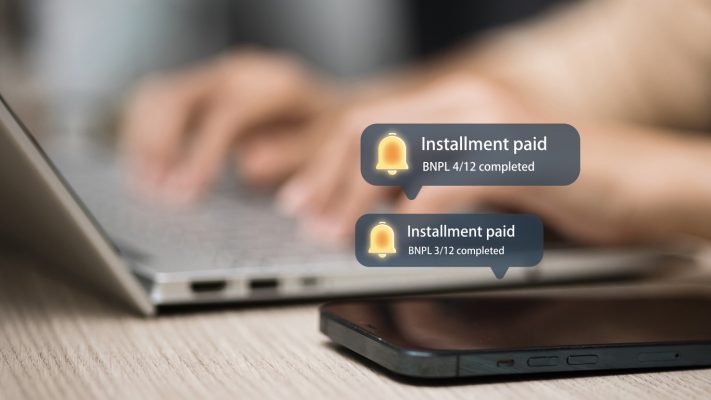
Buy Now, Pay Later (BNPL) debt is recoverable — but only if you stop accumulating it first and act strategically based on where you stand today. Whether you’ve missed a single payment or have balances spread across five apps heading toward collections, there is a structured path forward.*
Why BNPL debt sneaks up on you
The math that makes BNPL feel manageable is the same math that makes it dangerous. A $200 purchase split into four $50 installments doesn’t feel like debt — it feels like budgeting. Do that across three apps in a single month, and you’ve quietly committed $600 in future payments before you’ve checked your bank balance.
This is by design. Buy Now, Pay Later products are engineered around what behavioral economists call “payment decoupling” — separating the emotional satisfaction of a purchase from the pain of paying for it. A 2024 report from the Federal Reserve Bank of Boston found that BNPL borrowers are more likely to carry balances on credit cards, overdraft bank accounts, and use other high-cost financial products — a sign that BNPL is often layered on top of existing financial stress rather than replacing credit card use.
The multi-app problem accelerates this. Klarna, Affirm, Afterpay, and PayPal Pay Later each operate independently, with no shared visibility into what you owe elsewhere. A user with two active Klarna plans, one Affirm installment loan, and a PayPal Pay Later balance may not mentally add those up into a single debt figure — but a lender pulling a full financial picture would.
The missing piece that surprises most users: BNPL debt doesn’t always show on your credit report right away — but it often does eventually. Affirm reports most of its installment loans to credit bureaus. Klarna reports some plans. Afterpay has historically not reported to bureaus, but that is changing as the industry faces increased regulatory pressure. The CFPB issued an interpretive rule in 2024 confirming that BNPL lenders must provide consumers key legal protections that apply to conventional credit cards, a move intended to standardize reporting and consumer rights across the industry. The practical risk: a plan you thought was invisible to your credit file may already be there, or may appear after a default.
How serious is your BNPL situation?
The first step in any recovery plan is an honest audit. Pull up every BNPL app on your phone and document the following for each open plan: the total remaining balance, the next payment due date, whether any payments have been missed, and whether you’ve received any notices about collections or charge-off. Then answer three diagnostic questions:- Are any plans in missed-payment status? A single missed payment triggers late fees (more on those below) but is typically recoverable with a direct call to the provider. Two or more missed payments across multiple plans is a more serious pattern.
- Has anything been sent to a third-party collector? If you’ve received a collection notice from a company other than your original BNPL provider, that balance has likely been sold or referred. This changes your negotiating position — and your credit exposure.
- Is BNPL repayment competing with rent, groceries, or minimum payments on other bills? This is the red line. When BNPL installments are crowding out essential expenses, you’ve moved beyond a budgeting problem into a debt crisis that requires structured intervention, not just willpower.
Take your next step towards being debt-free
"*" indicates required fields
First: stop opening new plans
Before any recovery strategy works, new BNPL usage has to stop. This is non-negotiable. Attempting to negotiate a hardship plan with Afterpay while opening a new Klarna plan for a different purchase is working against yourself.
The practical steps: delete the apps from your phone, or at minimum log out and remove saved payment methods. Retailers integrate BNPL options directly into checkout flows — Klarna appears at checkout on thousands of merchant sites even if you don’t have the app open. Remove your card details from those merchant accounts where possible. The goal is to create friction between impulse and action. You cannot accurately measure how much you owe if the number keeps changing.
What happens when you miss BNPL payments
Late fees vary by provider and, in some cases, by the type of plan.
- Klarna charges a late fee capped at 25% of the order value, with a maximum of $7 per missed payment for its Pay in 4 product.
- Afterpay charges up to $8 for the first missed payment and up to $8 again if the account is not brought current within seven days, with fees capped at 25% of the order value.
- Sezzle charges up to a $10 rescheduling fee per missed payment. Affirm does not charge late fees on its loans — but missed payments still affect your credit.
Your recovery options, from least to most aggressive
Let’s map out your paths forward to see which one is best for you:Option 1: Negotiate directly with each BNPL provider
Direct negotiation is the right first move for anyone who is behind on payments but hasn’t reached collections. Most major BNPL providers have hardship programs that aren’t prominently advertised.- Klarna offers payment extensions and the ability to pause a plan — accessible through the app or via customer service.
- Affirm allows borrowers to request a payment deferral, and its customer service team has some discretion in restructuring plans for borrowers facing hardship.
- Afterpay allows one payment reschedule per order through the app. For more significant hardship, a direct call explaining your situation will typically get you further than app-only options.
When you call, be direct: say you’re experiencing financial hardship, you want to stay current and avoid collections, and you’d like to discuss available options. Providers have financial incentive to collect something rather than charge off the account — that gives you leverage.
Option 2: Consolidate BNPL into a personal loan
If you have multiple BNPL balances and can qualify for a personal loan at an interest rate lower than your effective BNPL penalty costs, consolidation makes mathematical sense. You take out a single fixed-rate loan, pay off all open BNPL plans, and make one monthly payment.
The caveat: this strategy requires decent credit. If your BNPL activity has already dinged your credit score, the personal loan rates available to you may be 20–30% APR or higher — which eliminates the benefit.
Run the math carefully: compare the total cost of your current BNPL repayment path (including any fees) against the total interest cost of a consolidation loan at the rate you’d actually qualify for. Credit unions and community development financial institutions (CDFIs) often offer more competitive rates for borrowers with imperfect credit than traditional banks.
Option 3: Debt management plan through a nonprofit credit counselor
A debt management plan (DMP) is a structured repayment arrangement set up through a nonprofit credit counseling agency. The counselor negotiates reduced interest rates and consolidated monthly payments with your creditors, and you make a single monthly payment to the agency, which distributes funds to each creditor.
Historically, DMPs were designed around credit card debt — but as the FTC’s guidance on debt management plans explains, a DMP involves depositing a single monthly payment with a counseling agency, which then distributes funds to creditors according to a negotiated schedule, and BNPL providers have grown more willing to work through structured repayment channels as the industry matures. A DMP will affect your credit during the repayment period but is significantly less damaging than settlement or bankruptcy.
Option 4: Debt settlement
Debt settlement is appropriate when balances have already charged off or been sold to collections and you have some lump-sum funds available to negotiate. Settlers typically offer creditors 40–60 cents on the dollar in exchange for marking the account as settled.
BNPL debt is unsecured, which makes it structurally eligible for settlement. The timeline is important: BNPL accounts can charge off relatively quickly — some providers charge off accounts as few as 60 to 90 days after the first missed payment, though the window can extend to 180 days. Once charged off, the provider (or a third-party collector who purchased the debt) may be motivated to settle for less than the full balance.
Realistic expectations:
- Settlement typically results in a “settled for less than full balance” notation on your credit report, which is negative but less damaging than an unresolved delinquency continuing to accumulate.
- The forgiven portion of the debt may be treated as taxable income — consult a tax professional if the settled amount is significant.
- For smaller BNPL balances (under $500), settlement may not be practical — collectors have less incentive to negotiate on small amounts. Settlement is better suited to cases where total BNPL debt reaches $1,500 or more.
Option 5: Bankruptcy
Bankruptcy is appropriate when BNPL debt is part of a broader picture of insolvency — meaning your total unsecured debts are unmanageable across credit cards, medical bills, personal loans, and BNPL combined, and your income cannot service them. BNPL debt is dischargeable in bankruptcy as unsecured debt, the same as credit card balances. Chapter 7 bankruptcy discharges qualifying unsecured debt in exchange for liquidating non-exempt assets; Chapter 13 restructures repayment over three to five years. Bankruptcy carries serious, long-lasting credit consequences (seven to ten years on your report) and involves court proceedings and attorney fees. It is a legitimate and legal remedy for genuine insolvency — not an extreme measure to be ashamed of — but it is the appropriate tool for severe cases, not a first response to a few missed BNPL payments.Is debt settlement right for BNPL debt?
Settlement deserves a closer look because BNPL debt has structural characteristics that make it more settlement-friendly than many people assume.- First, it is unsecured. There is no collateral backing your Afterpay balance — the provider cannot repossess what you bought. That limits their enforcement options and creates room for negotiation.
- Second, BNPL balances can move to charge-off status faster than credit card debt. Once charged off and potentially sold to a third-party collector, the debt buyer purchased the account at a discount — often 5 to 15 cents on the dollar — which means they may be willing to accept 40 to 60 cents and still profit.
- Third, many BNPL accounts involve relatively small individual balances. This cuts both ways: small balances are less likely to be pursued through litigation, but they’re also harder to negotiate meaningfully because there isn’t much room between the original balance and a settlement offer.
If you are falling further behind and the damage to your credit is already accumulating, settlement on a charged-off BNPL account may produce a better long-term outcome than continuing to miss payments on an account that will never be brought current.
Protect your credit and finances going forward
Check your credit reports from all three bureaus — Equifax, Experian, and TransUnion — at least once a month while navigating BNPL recovery. You can access all three free of charge at AnnualCreditReport.com. Watch specifically for any new BNPL tradelines appearing, incorrect delinquency dates, or collection accounts you don’t recognize.
If BNPL has already damaged your credit score, rebuilding follows the same fundamental principles as any credit recovery: pay all current accounts on time, reduce credit card utilization below 30%, and avoid opening new credit accounts unnecessarily. A secured credit card or a credit-builder loan from a credit union can help establish positive payment history over time.
For anyone who returns to BNPL use after recovery, one practical rule of thumb: never carry more than one active BNPL plan at a time, and only use it for purchases you could cover in full from your checking account if needed. The convenience of installment payments is a tool — it becomes a liability the moment repayment depends on future income you don’t yet have.
BNPL Debt FAQs
Yes. All major BNPL providers can refer delinquent accounts to internal collections teams or sell them to third-party debt buyers. This typically occurs after 60 to 180 days of nonpayment, depending on the provider.
It depends on the provider and plan type. Affirm reports most loans to credit bureaus. Klarna reports some products. Afterpay has historically not reported to bureaus but is changing this. After a default or charge-off, the account is more likely to appear — either from the original provider or from a collection agency that purchased the account.
In many cases, yes — particularly after charge-off. Settlements of 40 to 60 cents on the dollar are realistic on BNPL accounts that have been sold to third-party collectors, though results vary. Smaller balances under $500 are harder to settle because there is less room to negotiate.
BNPL debt is unsecured and generally dischargeable in bankruptcy. Chapter 7 would typically discharge it; Chapter 13 would include it in a structured repayment plan. Consult a bankruptcy attorney to evaluate whether the debt load and your overall financial picture warrant that approach.
Contact each provider directly and request a payment pause or hardship arrangement before the autopayment processes. Canceling or changing the debit card on file without notifying the provider is likely to trigger late fees and potentially accelerate collections activity. If a provider refuses to pause payments and you need immediate protection, you can contact your bank to block a specific merchant's ACH withdrawals — but communicate with the BNPL provider in parallel to avoid worsening the account status.
There’s always JG Wentworth…
Do you have $10,000 or more in unsecured debt? If so, there’s a good chance you’ll qualify for the JG Wentworth Debt Relief Program.** Some of our program perks include:
- One monthly program payment
- We negotiate on your behalf
- Average debt resolution in as little as 24-60 months
- We only get paid when we settle your debt
- Some clients save up to 46% before program fees
If you think you qualify for our program, give us a call today so we can go over the best options for your specific financial needs. Why go it alone when you can have a dedicated team on your side?
About the author

Recommended reading for you



* Program length varies depending on individual situation. Programs are between 24 and 60 months in length. Average graduated clients realize approximate savings of 44% before our program fee and 21% after program fee. This is a Debt resolution program provided by JGW Debt Settlement, LLC (“JGW” of “Us”)). JGW offers this program in the following states: AL, AK, AZ, AR, CA, CO, FL, ID, IN, IA, KY, LA, MD, MA, MI, MS, MO, MT, NE, NM, NV, NY, NC, OK, PA, SD, TN, TX, UT, VA, DC, and WI. If a consumer residing in CT, GA, HI, IL, KS, ME, NH, NJ, OH, RI, SC and VT contacts Us we may connect them with a law firm that provides debt resolution services in their state. JGW is licensed/registered to provide debt resolution services in states where licensing/registration is required.
Debt resolution program results will vary by individual situation. As such, debt resolution services are not appropriate for everyone. Not all debts are eligible for enrollment. Not all individuals who enroll complete our program for various reasons, including their ability to save sufficient funds. Savings resulting from successful negotiations may result in tax consequences, please consult with a tax professional regarding these consequences. The use of the debt settlement services and the failure to make payments to creditors: (1) Will likely adversely affect your creditworthiness (credit rating/credit score) and make it harder to obtain credit; (2) May result in your being subject to collections or being sued by creditors or debt collectors; and (3) May increase the amount of money you owe due to the accrual of fees and interest by creditors or debt collectors. Failure to pay your monthly bills in a timely manner will result in increased balances and will harm your credit rating. Not all creditors will agree to reduce principal balance, and they may pursue collection, including lawsuits. JGW’s fees are calculated based on a percentage of the debt enrolled in the program. Read and understand the program agreement prior to enrollment.
This information is provided for educational and informational purposes only. Such information or materials do not constitute and are not intended to provide legal, accounting, or tax advice and should not be relied on in that respect. We suggest that you consult an attorney, accountant, and/or financial advisor to answer any financial or legal questions.
**Not an actual customer. Example for illustrative purposes and does not take into account our program fee.


