


On this page
What's next




Earn a high-yield savings rate with JG Wentworth Debt Relief
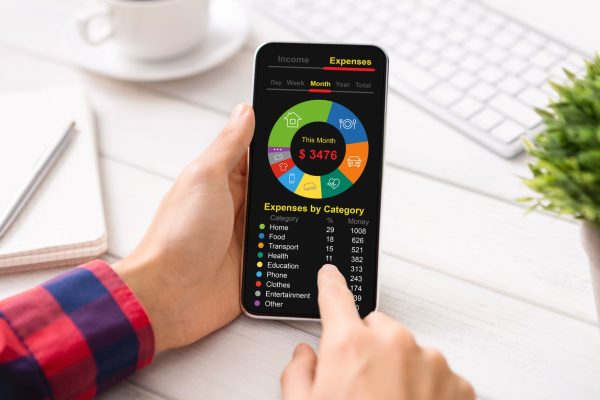
The best budgeting app for paying off debt is the one that forces every dollar into a plan and shows you exactly how much extra you can throw at your balances each month. For most people, that means a zero-based app like YNAB or EveryDollar, a flexible all-rounder like Monarch Money, or a free spreadsheet if you want full control without a subscription.
The stakes are high. U.S. consumers carried $1.26 trillion in credit card balances in the second quarter of 2026, according to the latest Household Debt and Credit Report from the Federal Reserve Bank of New York, and 4.7% of all household debt sat in some stage of delinquency. A budgeting app will not erase that debt. It will show you where your money goes, free up cash you did not know you had, and point that cash at your balances with purpose.
This information is provided for educational and informational purposes only. Such information or materials do not constitute and are not intended to provide legal, accounting, or tax advice and should not be relied on in that respect. We suggest that You consult an attorney, accountant, and/or financial advisor to answer any financial or legal questions.
How we picked these budgeting apps
We ranked every app on one question: does it help you find extra money and send it to your debt? Features that look good but do not change your payoff timeline counted for less.
We judged each app against five criteria:
- Debt payoff features. Built-in payoff plans, snowball or avalanche support, payoff date projections, and the ability to track loan and card balances alongside your budget.
- Account syncing reliability. How consistently the app connects to banks and card issuers, and whether it offers a manual option when syncing fails.
- Pricing. The true annual cost, the length of any free trial, and whether a usable free tier exists.
- Learning curve. How long it takes a new user to build a working budget and stick with it.
- Life after Mint. Whether the app is a realistic landing spot for former Mint users. Intuit closed Mint in March 2024 and pointed users toward Credit Karma, which lacked the budget-tracking tools that made Mint popular, as Engadget reported when the shutdown was announced. That left millions of people shopping for a replacement, and many still are.
Pricing reflects each company’s published rates at the time of writing. Subscription prices change often, so confirm the current rate on the app’s website before you sign up.
Take your next step towards being debt-free
"*" indicates required fields
Best budgeting apps for paying off debt at a glance
YNAB and EveryDollar lead for debt payoff because both use zero-based budgeting, which assigns every dollar a job before you spend it. The table below shows how all eight apps compare on price and debt features.
Prices reflect each company’s published rates at the time of writing and change often.
The best budgeting apps of 2026, reviewed
The right app depends on how you think about money, not on which one has the longest feature list. Pick the tool you will actually open every week, because consistency pays off debt faster than features do.
YNAB (You Need A Budget)
- Best for: Zero-based budgeting discipline.
- Pricing: $14.99 per month or $109 per year, with a 34-day free trial. One subscription covers up to six people.
- Debt payoff features: YNAB’s loan planner shows how much interest you save and how many months you cut when you add extra payments to a loan or card. Credit card payments are built into the budget, so you always know how much cash is set aside to cover your balance.
- What we liked: YNAB changes behavior. Its method asks you to give every dollar a job before the month starts, which is exactly the habit debt payoff demands. Education is excellent, with free workshops and guides.
- Drawbacks: YNAB is the most expensive app on this list, and the price has risen several times over the years. Expect a learning curve of a few weeks before the method clicks.
Monarch Money
- Best for: An all-around Mint replacement, especially for couples and shared finances.
- Pricing: $14.99 per month or $99.99 per year for the Core plan, with a seven-day free trial. A partner can join at no extra cost.
- Debt payoff features: Monarch tracks loans and credit cards next to your budget and lets you set goals for paying them down, so your net worth and your debt progress live on one dashboard.
- What we liked: Monarch is the closest thing to Mint’s all-in-one view, with a cleaner design, reliable syncing and strong household collaboration. It works on iPhone, Android and the web.
- Drawbacks: There is no free tier. Debt tools are solid but less prescriptive than YNAB’s or EveryDollar’s.
EveryDollar
- Best for: Snowball-method followers.
- Pricing: A free version with manual entry, or Premium at $17.99 per month or $79.99 per year, with a 14-day free trial.
- Debt payoff features: EveryDollar comes from Ramsey Solutions, and it is built around Dave Ramsey’s Baby Steps and debt snowball, which pays off the smallest balance first to build momentum.
- What we liked: The free version is a genuinely usable zero-based budget. Premium adds bank syncing, paycheck planning and access to the broader Ramsey ecosystem of coaching and content.
- Drawbacks: Even with Premium, you still assign each transaction to a category yourself, though the app suggests categories based on your history. The snowball approach ignores interest rates, which can cost more than the avalanche method on high-rate cards.
Rocket Money
- Best for: Finding cash by cancelling subscriptions.
- Pricing: A limited free tier, or Premium on a sliding scale you set in the app. Rocket Money does not publish a fixed price, and reported rates run from about $6 to $14 per month.
- Debt payoff features: Rocket Money’s strength is freeing up money rather than directing it. It flags recurring charges you forgot about, cancels them for you on Premium, and negotiates certain bills.
- What we liked: It finds leaks fast. For many people, one pass through their subscriptions frees up enough for a meaningful extra debt payment each month.
- Drawbacks: Bill negotiation carries a separate success fee, typically a large share of the first year’s savings. Budgeting tools are lighter than those in dedicated budgeting apps.
PocketGuard
- Best for: Simple “what can I actually spend” clarity.
- Pricing: PocketGuard Plus costs $12.99 per month, $74.99 per year or $149.99 for lifetime access, with a seven-day trial.
- Debt payoff features: Plus includes a debt payoff plan that supports both the snowball and avalanche methods and projects a payoff date.
- What we liked: The “In My Pocket” number subtracts bills, goals and savings from your income and shows what is safe to spend. For anyone overwhelmed by categories, that single figure is a relief.
- Drawbacks: Any free access is too limited for most households, so plan on paying for Plus. The lifetime plan only pays off if you stick with the app for several years.
Goodbudget
- Best for: A free envelope-method option.
- Pricing: Free with 20 envelopes, one account and two devices. Premium costs $10 per month or $80 per year.
- Debt payoff features: Goodbudget lets you track debts and fund a dedicated envelope for extra payments, which keeps payoff money from leaking into everyday spending.
- What we liked: It is the digital version of cash envelopes, and couples can share the same budget across phones. The free plan does not require linking a bank account.
- Drawbacks: The free plan runs on manual entry, and investment and debt accounts do not sync automatically even on Premium.
Copilot Money
- Best for: iOS users who want automation.
- Pricing: $13 per month or $95 per year, with a free trial.
- Debt payoff features: Copilot tracks card and loan balances automatically and shows spending trends that reveal where extra payment money can come from. Its tools focus on tracking balances rather than building a snowball or avalanche payoff plan.
- What we liked: Copilot has the most polished design on this list, and its automatic categorization learns your habits quickly. It runs on iPhone, iPad, Mac and the web.
- Drawbacks: There is no Android app. Its debt tools track progress rather than build a payoff plan.
Empower Personal Dashboard
- Best for: A free option for tracking net worth alongside debt.
- Pricing: Free.
- Debt payoff features: Empower aggregates bank, credit card, loan and investment accounts into one net worth view, so you can watch your debt shrink as your balance sheet improves.
- What we liked: It is a capable free tool, especially if you also have retirement or brokerage accounts to monitor.
- Drawbacks: Budgeting is basic compared with the dedicated apps above. The dashboard is a doorway to Empower’s paid wealth management services, so expect outreach about them.
Free budgeting apps vs. paid: Is it worth paying?
Start free. If you are budgeting because debt is squeezing you, a $100-a-year app is itself a line item, and every dollar you spend on software is a dollar that is not reducing a balance.
That trade-off is real for millions of households. In the Federal Reserve’s latest survey of household finances, 18% of adults said the largest emergency expense they could cover using only savings was under $100. For someone in that position, a subscription competes directly with an emergency fund.
Free tools do the core job well:
- EveryDollar’s free plan runs a full zero-based budget.
- Goodbudget’s free plan covers envelope budgeting.
- Empower tracks your net worth at no cost.
The trade-off is time: most free plans require manual transaction entry or limit how many accounts you can connect.
Use this rule of thumb: pay for an app only when it will save you more than it costs within the first 90 days. Paid is justified in three situations:
- Automation keeps you consistent. If you have abandoned manual budgets before, bank syncing may be the difference between a budget you keep and one you quit.
- The app finds money you would miss. A single cancelled subscription or lowered bill can cover a year of fees.
- You share finances. One shared app keeps both partners working from the same numbers, so no one is surprised by a purchase that derails the payoff plan.
Use every free trial fully before you pay, and set a calendar reminder to cancel if the app is not earning its keep.
Budgeting apps vs. spreadsheets: Which works better for debt payoff?
A spreadsheet works better for debt payoff if you want full control and zero cost; an app works better if you need automation to stay consistent. Both succeed when you update them every week, and both fail when you ignore them.
- Apps win on convenience. They import transactions, categorize spending and send reminders.
- Spreadsheets win on flexibility. You decide exactly how debts are ordered, how extra payments roll forward and what your payoff timeline looks like, with no subscription and no bank login.
Free debt payoff spreadsheet template (Google Sheets and Excel)
Our free debt payoff and budget template gives you the control of a spreadsheet with the structure of an app. It is an ungated download, so there is no email required. [Download the free template for Google Sheets or Excel.]
The template includes:
- A monthly budget tab that follows the zero-based method, so income minus expenses, savings and debt payments equals zero.
- A debt list with each balance, interest rate and minimum payment.
- Snowball and avalanche toggles that reorder your debts by smallest balance or highest interest rate.
- An extra payment field that rolls freed-up cash into the next debt automatically.
- A debt-free date projection that updates every time you change a number.
When a spreadsheet beats an app
A spreadsheet is the better choice in four situations:
- You want full control. Every formula is visible and editable, so the plan fits your debts rather than an app’s assumptions.
- You do not want another subscription. Google Sheets is free, and the money you save goes straight to your balances.
- You have bank-linking privacy concerns. A spreadsheet never asks for your bank credentials.
- You already track spending elsewhere. If your bank’s app shows spending by category, a spreadsheet can handle the planning while the bank handles the tracking.
The trade-off is effort. Plan on 15 to 20 minutes a week to enter transactions and update balances. That weekly check-in is also what makes the plan work.
How to build a budget that actually pays off debt
A budget pays off debt when it does two jobs: it frees up cash, and it sends that cash to one debt at a time. The app or spreadsheet is only the tool; the plan is what gets you out.
That plan matters more now than it did a few years ago. The FINRA Foundation’s 2024 National Financial Capability Study found that more U.S. adults are spending more than they earn and fewer are paying off their credit cards in full each month, a reversal after more than a decade of improvement. A written budget is the first step to reversing that pattern in your own household.
50/30/20 vs. zero-based budgeting for debt payoff
Choose zero-based budgeting when debt is your priority. It gives every dollar a specific job, which exposes exactly how much you can put toward debt each month.
The 50/30/20 rule
- Splits take-home pay into 50% for needs, 30% for wants and 20% for savings and debt.
- Is simple, but treats debt payoff as part of a fixed 20% slice.
- Leaves little room to get ahead if your minimum payments alone eat up most of that slice.
Zero-based budgeting
- Starts with your income and assigns it until nothing is left unassigned.
- Gives debt payments a line of their own.
- Moves any money you trim from dining out or subscriptions straight to that line.
The result is a budget built around payoff rather than one that squeezes payoff into leftover space.
Finding money for extra debt payments
The fastest extra payments come from money you are already spending without noticing. Start with these three moves:
- Audit your subscriptions. Pull three months of bank and card statements and cancel anything you have not used in the past 30 days.
- Negotiate your bills. Call your phone, internet and insurance providers and ask for a lower rate or a loyalty discount. Some providers will match a competitor’s offer if you ask.
- Assign windfalls before they arrive. Decide now that tax refunds, bonuses and cash gifts go to debt, so the money has a job before you are tempted to spend it.
For more ideas, see our guide on how to make extra money to pay off debt.
Pairing your budget with the snowball or avalanche method
Your budget frees the cash, and your payoff method directs it. Pick one method and apply every extra dollar to a single target debt while paying minimums on the rest.
- Debt snowball: The debt snowball method pays off the smallest balance first for quick wins.
- Debt avalanche: The debt avalanche method pays off the highest interest rate first to save the most money.
Research supports the psychology behind the snowball: a Kellogg School of Management study of 6,000 people found that consumers who paid off their smallest balances first were more likely to eliminate their debt entirely, even though the avalanche costs less in interest. The best method is the one you will stick with.
Setting a realistic debt-free date
Set a debt-free date you can actually hit:
- Add up your balances.
- List each interest rate.
- Plug in the monthly amount your budget frees up.
Our debt payoff calculator shows how much sooner you will finish, and how much interest you will save, when you add even $50 or $100 a month to your payments. Write the date down, put it somewhere you will see it, and revisit it every month as your balances fall.
When budgeting alone won’t close the gap
Budgeting apps solve a visibility problem, not a math problem. If your minimum payments already exceed what is left after essentials, no app, spreadsheet or method can make the numbers work on its own.
Run this quick test:
- Add up your monthly take-home pay.
- Subtract rent or mortgage, utilities, groceries, insurance, transportation and child care.
- Subtract the minimum payments on every debt.
If the result is negative, or so close to zero that one car repair would push you behind, you have a gap that cutting subscriptions will not close.
Watch for these signs that you need more than a budget:
- You pay only minimums, and balances are not falling. Interest is absorbing most of each payment.
- You use credit cards to cover essentials. New charges are replacing the balances you pay down.
- You are falling behind on payments. Late fees and penalty rates make the gap wider every month.
- Your debt-free date is more than five years away, even with an aggressive budget.
A budget remains essential either way: it is what keeps you on track once the math is back in your favor.
Frequently asked questions
YNAB is the best budgeting app for paying off debt for most people because its zero-based method assigns every dollar a job and its loan planner shows how extra payments shorten your timeline. EveryDollar is the best pick for snowball followers, and Monarch Money is the best all-around option for couples.
Yes. EveryDollar, Goodbudget and Empower Personal Dashboard all offer free versions you can use indefinitely. EveryDollar’s free plan runs a full zero-based budget, and Goodbudget’s covers envelope budgeting. Free plans usually require manual transaction entry, so expect to spend a few minutes a week keeping them current.
Intuit closed Mint in March 2024 and moved users to Credit Karma, which does not offer full budgeting tools. Monarch Money is the closest replacement, with a similar all-in-one dashboard, reliable syncing and shared household access. Copilot Money is a strong alternative for iPhone users, and Empower is the best free option.
Budgeting apps help you get out of debt when they change your habits, not just when you download them. They reveal where your money goes and free up cash for extra payments. They cannot fix a budget where minimum payments exceed your income after essentials; that gap requires a debt relief solution.
YNAB is worth $109 a year if it helps you find more than $109 for extra debt payments, which is a low bar for most users who follow the method. Take the full 34-day free trial first. If you would rather not pay, EveryDollar’s free plan uses the same zero-based approach.
Most reputable budgeting apps are safe to link. They connect through encrypted third-party services, and many banks use secure tokens instead of sharing your password. Federal rules for app data sharing remain unsettled: a court has blocked enforcement of the CFPB’s open banking rule while the agency reconsiders it. Use two-factor authentication and review each app’s privacy policy.
The best way to budget to pay off credit card debt is to use a zero-based budget, stop adding new charges, and send every extra dollar to one card at a time. Choose the snowball method for motivation or the avalanche method to save the most interest, then track your debt-free date monthly.
Yes, a spreadsheet works as well as an app for debt payoff if you update it every week. It costs nothing, never asks for your bank login and lets you customize your payoff order. Our free debt payoff spreadsheet template for Google Sheets and Excel includes snowball and avalanche options and a debt-free date projection.
There’s always JG Wentworth…
Do you have $10,000 or more in unsecured debt? If so, there’s a good chance you’ll qualify for the JG Wentworth Debt Relief Program.** Some of our program perks include:
- One monthly program payment
- We negotiate on your behalf
- Average debt resolution in as little as 24-60 months
- We only get paid when we settle your debt
- Some clients save up to 44% before program fees
If you think you qualify for our program, give us a call today so we can go over the best options for your specific financial needs. Why go it alone when you can have a dedicated team on your side?
Program length varies depending on individual situation. Programs are between approximately 24 and 60 months in length. Clients who are able to stay with the program and get all their debt settled have realized approximate average savings of 44% of their originally enrolled balance, before our 26% program fee. These savings are based on JGW client data from June 2025 through April 2026, reflect historical results, and are not guaranteed. JGW’s fees are calculated based on a percentage of the debt enrolled in the program. Read and understand the program agreement prior to enrollment.
“Debt free” refers only to enrolled unsecured debts resolved through our program. Results vary and are not guaranteed.
This is a Debt resolution program provided by JGW Debt Settlement, LLC (“JGW” of “Us”)). JGW offers this program in the following states: AL, AK, AZ, AR, CA, CO, FL, ID, IN, KY, LA, MD, MA, MI, MS, MO, MT, NE, NM, NV, NY, NC, OK, PA, PR, SD, TN, TX, UT, VA, DC. If a consumer residing in any other state contacts Us we may connect them with a law firm that provides debt resolution services in their state. JGW is licensed/registered to provide debt resolution services in states where licensing/registration is required.
Debt resolution program results will vary by individual situation. As such, debt resolution services are not appropriate for everyone. Not all debts are eligible for enrollment. Not all individuals who enroll complete our program for various reasons, including their ability to save sufficient funds. Savings resulting from successful negotiations may result in tax consequences, please consult with a tax professional regarding these consequences. The use of the debt settlement services and the failure to make payments to creditors: (1) Will likely adversely affect your creditworthiness (credit rating/credit score) and make it harder to obtain credit; (2) May result in your being subject to collections or being sued by creditors or debt collectors; and (3) May increase the amount of money you owe due to the accrual of fees and interest by creditors or debt collectors. Failure to pay your monthly bills in a timely manner will result in increased balances and will harm your credit rating. Not all creditors will agree to reduce principal balance, and they may pursue collection, including lawsuits.
JG Wentworth does not pay or assume any debts or provide legal advice, financial advice, tax advice, or credit repair services. You should consult with independent professionals for such advice or services. Please consult with a bankruptcy attorney for information on bankruptcy.
List of Licenses can be accessed here: Licenses – JG Wentworth
SOURCES CITED
- Boyer, Ray. “The ‘Snowball Approach’ to Debt.” Kellogg School of Management, Northwestern University, Aug. 7, 2012. https://www.kellogg.northwestern.edu/news/blog/2012/08/07/the-snowball-approach-to-debt/
- Dent, Steve. “Intuit Is Shutting Down Mint, Its Popular Free Budget-Tracking App.” Engadget, Nov. 3, 2023. https://www.engadget.com/intuit-is-closing-down-mint-its-popular-free-budget-tracking-app-054145229.html
- FINRA Investor Education Foundation. “FINRA Foundation Releases Sixth Wave of the National Financial Capability Study.” FINRA, July 16, 2025. https://www.finra.org/media-center/newsreleases/2025/finra-foundation-releases-sixth-wave-national-financial-capability
- Watson, Brett. “Section 1033 Compliance Date: Open Banking Rule Enjoined and Under Reconsideration.” Cozen O’Connor, April 9, 2026. https://www.cozen.com/news-resources/publications/2026/section-1033-compliance-date-open-banking-rule-enjoined-and-under-reconsideration
- Board of Governors of the Federal Reserve System. “Report on the Economic Well-Being of U.S. Households in 2025: Savings and Investments.” Federal Reserve, May 13, 2026. https://www.federalreserve.gov/publications/2026-economic-well-being-of-us-households-in-2025-savings-investments.htm
- Federal Reserve Bank of New York. “Household Debt Balances Decreased Slightly; Credit Card Delinquency Transition Rates Remained Steady.” Federal Reserve Bank of New York, Aug. 11, 2026. https://www.newyorkfed.org/newsevents/news/research/2026/20260811
About the author

Recommended reading for you




* Program length varies depending on individual situation. Programs are between 24 and 60 months in length. Average graduated clients realize approximate savings of 44% before our program fee and 21% after program fee. This is a Debt resolution program provided by JGW Debt Settlement, LLC (“JGW” of “Us”)). JGW offers this program in the following states: AL, AK, AZ, AR, CA, CO, FL, ID, IN, IA, KY, LA, MD, MA, MI, MS, MO, MT, NE, NM, NV, NY, NC, OK, PA, SD, TN, TX, UT, VA, DC, and WI. If a consumer residing in CT, GA, HI, IL, KS, ME, NH, NJ, OH, RI, SC and VT contacts Us we may connect them with a law firm that provides debt resolution services in their state. JGW is licensed/registered to provide debt resolution services in states where licensing/registration is required.
Debt resolution program results will vary by individual situation. As such, debt resolution services are not appropriate for everyone. Not all debts are eligible for enrollment. Not all individuals who enroll complete our program for various reasons, including their ability to save sufficient funds. Savings resulting from successful negotiations may result in tax consequences, please consult with a tax professional regarding these consequences. The use of the debt settlement services and the failure to make payments to creditors: (1) Will likely adversely affect your creditworthiness (credit rating/credit score) and make it harder to obtain credit; (2) May result in your being subject to collections or being sued by creditors or debt collectors; and (3) May increase the amount of money you owe due to the accrual of fees and interest by creditors or debt collectors. Failure to pay your monthly bills in a timely manner will result in increased balances and will harm your credit rating. Not all creditors will agree to reduce principal balance, and they may pursue collection, including lawsuits. JGW’s fees are calculated based on a percentage of the debt enrolled in the program. Read and understand the program agreement prior to enrollment.
This information is provided for educational and informational purposes only. Such information or materials do not constitute and are not intended to provide legal, accounting, or tax advice and should not be relied on in that respect. We suggest that you consult an attorney, accountant, and/or financial advisor to answer any financial or legal questions.
**Not an actual customer. Example for illustrative purposes and does not take into account our program fee.


