


On this page
What's next



Earn a high-yield savings rate with JG Wentworth Debt Relief
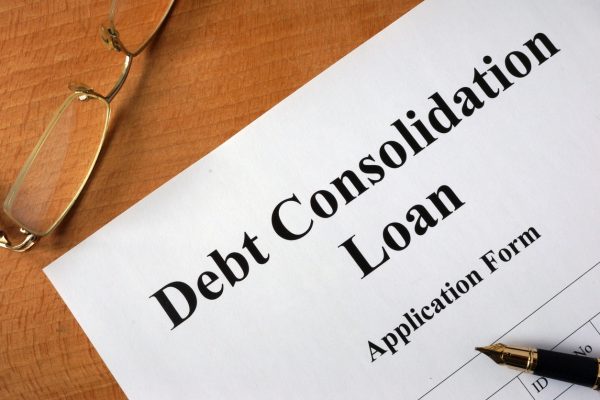
Debt consolidation can be a good idea when it lowers your interest rate, simplifies your payments, and you’ve already fixed the spending habits that created the debt. It’s a bad idea when it just rearranges the same debt at a similar (or higher) cost, or when it’s used as a substitute for changing how you spend. The tool itself is neutral. What makes it work — or backfire — is the borrower’s situation going in.
American households are carrying more credit card debt than at almost any point on record. Total balances stood at $1.25 trillion in the first quarter of 2026, according to the Federal Reserve Bank of New York’s Household Debt and Credit Report, and the average interest rate on credit card accounts that were assessed was north of 21%. At those rates, minimum payments barely dent the principal. That’s the exact environment debt consolidation was built for — and also the environment where it gets oversold. *
Is debt consolidation a good idea? The short answer
Whether consolidation helps or hurts comes down to math and behavior, not marketing. If a new loan or balance transfer drops your interest rate by a meaningful margin and you can comfortably afford the new payment, consolidation can save you real money and get you debt-free faster.
- When it may be a smart move. Consolidation tends to work well for someone with multiple high-interest credit card balances, a credit score strong enough to qualify for a lower rate, steady income, and a clear understanding of what caused the debt in the first place. In that scenario, you’re trading expensive, scattered debt for cheaper, organized debt.
- When it may be the wrong move. Consolidation can backfire when the new loan’s rate isn’t meaningfully better than what you’re already paying, when fees eat up the savings, or when paid-off credit cards get used again instead of closed or frozen. In those cases, you haven’t solved anything — you’ve just added a new bill on top of the old problem.
- Who it’s not designed for. Debt consolidation is not designed for people who are already behind on payments, whose debt load is unsustainable relative to income, or who need their debt amount reduced rather than reorganized. Those situations usually call for credit counseling, debt settlement, or bankruptcy — not a new loan.
Take your next step towards being debt-free
"*" indicates required fields
How debt consolidation works (quick refresher)
Debt consolidation combines multiple debts into a single payment, ideally at a lower overall cost. It does not erase what you owe; it restructures it. The Consumer Financial Protection Bureau is direct about this: consolidation loans simplify payments and may lower your rate, but they can also stretch repayment over a longer term, and that extra time can add cost even when the rate looks better on paper.
- Debt consolidation loans: A bank, credit union, or online lender gives you a fixed-rate, fixed-term personal loan. You use it to pay off your existing debts, then make one monthly payment to the new lender. Approval and rate depend heavily on credit score and income.
- Balance transfer credit cards: You move existing balances onto a new card, often with a 0% introductory APR for 12 to 21 months. This can be the cheapest option if you pay off the balance before the promotional period ends — but balance transfer fees (typically 3% to 5% of the transferred amount) and a return to a high standard APR afterward can erase the benefit.
- Home equity options: A home equity loan or HELOC lets you borrow against equity in your home, often at a lower rate than unsecured debt. The tradeoff is that your house becomes collateral. Miss payments, and you risk foreclosure on debt that started as credit card balances.
- Debt management plans (credit counseling): A nonprofit credit counseling agency negotiates with your creditors on your behalf, often securing lower interest rates or waived fees. You make one payment to the agency, which distributes it to creditors. This doesn’t require a new loan or a hard credit check, but it usually requires closing the credit cards involved.
The real pros of consolidating debt
Consolidation’s biggest advantage is structural simplicity, and that simplicity is worth more than it sounds.
- One payment, one due date removes the chance of missing a payment because you lost track of five different due dates across five different cards — and missed payments are the single most damaging thing you can do to your credit.
- A lower interest rate is the other major benefit, though it’s not guaranteed. Borrowers with good-to-excellent credit routinely qualify for personal loan rates well below the 21%-plus average APR on revolving credit card debt, according to Bankrate’s debt consolidation loan data, which puts the best available rates in the high single digits for the most qualified applicants. That gap compounds quickly: less interest accrued means more of every payment goes toward principal.
- Fixed payoff timeline. Unlike a credit card, where the balance can theoretically sit forever as long as you make minimum payments, a consolidation loan has a defined end date. That built-in finish line is a powerful motivator and a useful planning tool.
- Potential credit score boost from lower utilization. Paying off revolving credit card balances with an installment loan can immediately lower your credit utilization ratio — one of the most heavily weighted factors in your credit score.
The real cons (what lenders won’t tell you)
Despite the upside, consolidation has real costs that don’t always show up in the marketing.
- You can end up paying more in the long run. A lower monthly payment often comes from a longer repayment term, not a lower total cost. The CFPB warns that consumers should calculate total interest and fees over the full life of a consolidation loan before assuming it’s cheaper — a lower payment stretched over extra years can cost more overall than the original debt would have.
- Origination fees and closing costs are common, particularly on personal loans and home equity products. These fees are sometimes deducted from the loan proceeds, meaning you receive less cash than you borrowed but still owe the full amount.
- A temporary credit score dip from a hard inquiry is nearly universal. Applying for a new loan or card triggers a hard pull, which typically costs fewer than five points and fades from your score within months, per Experian’s analysis of credit inquiries. It’s a real cost, just usually a minor and short-lived one.
- Risk of running up the old cards again. Consolidation frees up available credit on the cards you just paid off. Without a plan to close, freeze, or strictly limit those cards, it’s easy to end up with both the new consolidation loan and a fresh round of card debt — a worse position than the one you started in.
- As with secured loans, your home or car is on the line. A home equity loan or line of credit converts unsecured credit card debt into debt secured by your house. If your income drops or payments slip, the consequences escalate from a damaged credit score to a potential foreclosure.
Does debt consolidation hurt your credit?
In the short term, it may have a modest impact on your credit score in the long term, it depends entirely on your follow-through. The short-term hit usually comes from two sources: the hard inquiry when you apply, and the impact of opening a new account, which slightly lowers the average age of your credit history. Both effects are well documented and both tend to be minor, according to Experian’s credit education team, which notes that a single inquiry typically costs fewer than five points and recovers within months.
The long-term impact depends on utilization and payment history — the two heaviest factors in most credit scoring models. If consolidation lowers your credit utilization and you make every payment on time, your score often rises above where it started, sometimes significantly. If you keep the old cards open and use them, or you struggle with the new fixed payment, the long-term effect turns negative.
Debt consolidation can be a useful tool for managing debt, but it does not guarantee credit score improvement. Individual results vary based on a person’s overall credit profile and financial habits.
When debt consolidation is a good idea
Consolidation earns its keep under a specific, recognizable set of conditions.
You have high-interest credit card debt. With average card APRs sitting above 21%, many qualifying personal loan rates may represent savings, depending on fees, term length, and total repayment cost — especially on balances that have been accumulating interest for months or years.
- Your credit score qualifies you for a lower APR. This is the single most important variable. If your credit isn’t strong enough to beat your current rate, consolidation doesn’t deliver its main benefit — it just adds a fee and a new account.
- You have steady income to cover the fixed payment. A consolidation loan replaces flexible minimum payments with a fixed obligation. That only works if your income can reliably absorb it, including in a slow month.
- You’ve addressed the spending habits that caused the debt. This is the condition borrowers skip most often, and it’s the one that determines whether consolidation is a turning point or a temporary patch. Consolidating debt without changing the behavior that created it tends to produce the same debt again within a year or two.
When debt consolidation is a bad idea
The same logic runs in reverse for a few common situations.
- Your debt is too small to justify the fees. If you owe a few hundred dollars or a few thousand dollars, origination fees and the hassle of a new loan can outweigh the modest interest savings — a focused payoff plan is often simpler and cheaper.
- Your credit is too low to get a better rate. Consolidation only helps if the new rate beats the old one. Borrowers with lower credit scores are sometimes offered consolidation loans at rates similar to — or higher than — their existing credit cards, which defeats the purpose entirely.
- You’re already behind on payments. Lenders generally want to see a reasonably current payment history before approving a new loan, and even when approved, adding a new fixed obligation to an already strained budget may make the situation harder to manage. If you’re already behind, it may be worth considering credit counseling or negotiating directly with creditors before taking on new debt.
- You’d just rack up new debt on the paid-off cards. If there’s no clear plan to keep those cards from being used again, consolidation doesn’t reduce your debt. It just adds a new loan payment to the pile.
Debt consolidation vs. other options
Consolidation isn’t the only path out of debt, and it’s not always the right one.
- Debt consolidation vs. debt settlement: consolidation pays off your full balance through a new loan, while settlement involves negotiating with creditors to accept less than what’s owed — usually after falling behind on payments on purpose. Settlement can reduce total debt, but the Federal Trade Commission warns that stopping payments to fund a settlement account often triggers late fees, collection calls, and lasting credit damage before any deal is reached. Consolidation, by contrast, keeps your accounts current throughout.
- Debt consolidation vs. bankruptcy: bankruptcy is a legal process that can discharge or restructure debt you have no realistic way to repay, but it carries a severe and long-lasting credit impact and isn’t appropriate for manageable debt loads. Consolidation works when you can repay what you owe under better terms; bankruptcy exists for when you genuinely can’t.
- Debt consolidation vs. DIY payoff (snowball/avalanche:) both the snowball method (paying off smallest balances first for momentum) and the avalanche method (paying off highest-interest balances first to save money) avoid new loans, fees, and credit inquiries entirely. They require more discipline and typically take longer, but they cost nothing extra and carry zero risk of secured collateral. For borrowers who can’t qualify for a meaningfully better rate, a disciplined DIY payoff plan often beats consolidation outright.
How to decide if it’s right for you
A short self-assessment usually reveals the answer before you ever fill out an application.
Four questions to ask yourself:
- Is my current interest rate higher than what I’d realistically qualify for elsewhere?
- Can I afford the new fixed payment even in a tight month?
- Have I identified — and fixed — what caused this debt?
- Do I have a plan for the credit cards I’m about to pay off?
If you answered yes to all four, consolidation is likely a smart move. If you answered no to two or more, it’s worth pausing before applying.
- Numbers to run before you apply: compare your current weighted average interest rate against the new loan’s APR, add up every fee (origination, balance transfer, closing costs), and calculate total interest paid over the full term of each option — not just the monthly payment. Calculators will show how monthly payment can still cost thousands more over a longer term, which is exactly the comparison most borrowers skip.
- Red flags in consolidation offers: be cautious of “guaranteed” approval before any credit check, upfront fees required before funding, pressure to stop paying existing creditors, and rates described only as “teaser” or promotional without a clear explanation of what happens after the introductory period ends. The CFPB specifically flags consolidation promotions that look or sound like debt settlement in disguise — read the fine print on what the company actually does with your money before you sign anything.
Frequently asked questions
No, not typically. It may cause a small, temporary dip from the hard inquiry and the new account. Used responsibly — lower utilization, on-time payments — it tends to help your credit over time rather than hurt it. Individual results vary based on a person's credit profile and financial habits.
There's no fixed minimum, but consolidation generally makes the most sense once fees and the new rate produce clear net savings — for many borrowers, that means at least a few thousand dollars in high-interest debt across multiple accounts. Below that, the math often favors a direct payoff plan instead.
Yes, but the terms matter more than the approval. Lenders do offer consolidation loans to borrowers with lower credit scores, often through secured loans or with a cosigner, but the rate may not be meaningfully better than what you're already paying. Run the numbers before assuming consolidation will save you money.
Not automatically. A consolidation loan or balance transfer pays off the balance, but the card itself typically stays open unless you close it. Debt management plans through credit counseling are the exception — they usually require closing the accounts included in the plan as a condition of the lower rates creditors agree to.
There’s always JG Wentworth…
Do you have $10,000 or more in unsecured debt? If so, there’s a good chance you’ll qualify for the JG Wentworth Debt Relief Program.** Some of our program perks include:
- One monthly program payment
- We negotiate on your behalf
- Average debt resolution in as little as 24-60 months
- We only get paid when we settle your debt
- Some clients save up to 46% before program fees
SOURCES CITED
- Experian, “Pros and Cons of Debt Consolidation.”
- Consumer Financial Protection Bureau, “What do I need to know about consolidating my credit card debt?”
- Federal Trade Commission, “How To Get Out of Debt,”
- Federal Reserve Bank of New York, “Household Debt and Credit Report,”
- Federal Reserve Board, “Consumer Credit – G.19.”
- Bankrate, “Best Debt Consolidation Loans.”
About the author

Recommended reading for you



* Program length varies depending on individual situation. Programs are between 24 and 60 months in length. Average graduated clients realize approximate savings of 44% before our program fee and 21% after program fee. This is a Debt resolution program provided by JGW Debt Settlement, LLC (“JGW” of “Us”)). JGW offers this program in the following states: AL, AK, AZ, AR, CA, CO, FL, ID, IN, IA, KY, LA, MD, MA, MI, MS, MO, MT, NE, NM, NV, NY, NC, OK, PA, SD, TN, TX, UT, VA, DC, and WI. If a consumer residing in CT, GA, HI, IL, KS, ME, NH, NJ, OH, RI, SC and VT contacts Us we may connect them with a law firm that provides debt resolution services in their state. JGW is licensed/registered to provide debt resolution services in states where licensing/registration is required.
Debt resolution program results will vary by individual situation. As such, debt resolution services are not appropriate for everyone. Not all debts are eligible for enrollment. Not all individuals who enroll complete our program for various reasons, including their ability to save sufficient funds. Savings resulting from successful negotiations may result in tax consequences, please consult with a tax professional regarding these consequences. The use of the debt settlement services and the failure to make payments to creditors: (1) Will likely adversely affect your creditworthiness (credit rating/credit score) and make it harder to obtain credit; (2) May result in your being subject to collections or being sued by creditors or debt collectors; and (3) May increase the amount of money you owe due to the accrual of fees and interest by creditors or debt collectors. Failure to pay your monthly bills in a timely manner will result in increased balances and will harm your credit rating. Not all creditors will agree to reduce principal balance, and they may pursue collection, including lawsuits. JGW’s fees are calculated based on a percentage of the debt enrolled in the program. Read and understand the program agreement prior to enrollment.
This information is provided for educational and informational purposes only. Such information or materials do not constitute and are not intended to provide legal, accounting, or tax advice and should not be relied on in that respect. We suggest that you consult an attorney, accountant, and/or financial advisor to answer any financial or legal questions.
**Not an actual customer. Example for illustrative purposes and does not take into account our program fee.


