


On this page
What's next



Earn a high-yield savings rate with JG Wentworth Debt Relief
How to Stop Interest From Growing on Your Credit Card Debt
•
•
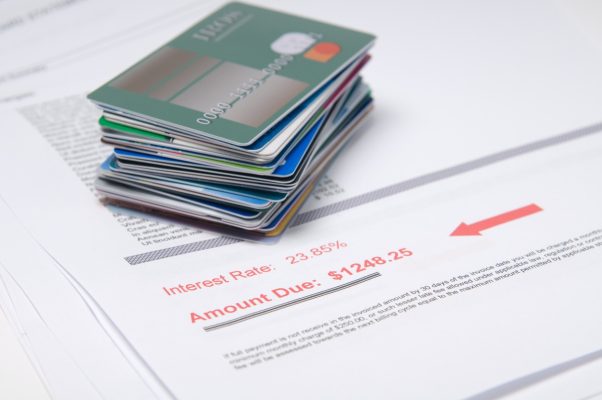
Credit card interest does not grow steadily — it compounds daily, which is why a balance that feels manageable in January can feel unmanageable by summer. The good news is that there are six proven ways to slow or stop that growth: transferring the balance to a 0% APR card, taking out a debt consolidation loan, negotiating directly with your issuer, restructuring how you pay down multiple cards, or, in more serious cases, pursuing debt settlement or bankruptcy. Each option works differently, and the right one depends on your credit score, the size of your balance, and how much time you realistically need.
This information is provided for educational and informational purposes only. Such information or materials do not constitute and are not intended to provide legal, accounting, or tax advice and should not be relied on in that respect. We suggest that You consult an attorney, accountant, and/or financial advisor to answer any financial or legal questions.
Why credit card interest compounds so fast
Credit card debt grows faster than almost any other consumer debt because interest is calculated and added to your balance every single day, not once a month. That daily compounding is the core reason a balance that never shrinks can still feel like it’s “growing on its own.” The average credit card interest rate has hovered around 21% APR through early 2026, and card issuers use that annual figure only as a starting point — the real calculation happens far more often than once a year.
Card APRs are typically set as the prime rate plus an individual margin, which is why they move quickly whenever the Federal Reserve changes its benchmark rate, according to Federal Reserve Bank of Boston research on how interest rate changes flow through to credit card accounts.
Daily periodic rate math
- Issuers convert your APR into a daily periodic rate — your APR divided by 365 — and apply it to your balance every day, then add that day’s interest into the balance the next day. On a $6,000 balance at 21% APR, that daily rate works out to roughly $3.45 in day-one interest, and because that interest gets folded into the principal, day two’s interest is calculated on a slightly larger number.
- Over a full billing cycle, this daily compounding adds up to meaningfully more cost than a simple monthly calculation would suggest, which is why two cards with the same advertised APR can produce different real-world costs depending on how often they compound.
The minimum payment trap
- Minimum payments are structured to keep an account current, not to pay off debt in a reasonable timeframe. Most issuers set the minimum at 1% to 3% of the balance plus that month’s interest and fees, which means the majority of a minimum payment on a high-interest card goes straight to interest rather than principal.
- Regulators have flagged this pattern directly: the Consumer Financial Protection Bureau’s 2025 market report found that credit card debt exceeded $1.2 trillion at the end of 2024, that the share of cardholders making only the minimum payment reached its highest level since at least 2015, and that consumers were assessed $160 billion in interest charges in 2024, up from $105 billion just two years earlier.
- That trend is documented in detail in the CFPB’s Consumer Credit Card Market Report, and it underscores a simple truth: paying only the minimum is one of the most expensive financial habits a household can maintain, because it stretches repayment out for years while interest keeps compounding on nearly the full balance.
Higher APRs on cash advances
- Cash advances carry a separate, higher APR than purchases, and interest on them typically starts accruing immediately, with no grace period at all. Where a standard purchase might carry a 21% rate and a 21-to-25-day grace period before interest kicks in, a cash advance on the same card commonly carries an APR in the high 20s and begins compounding the moment the transaction posts.
- If you are carrying a balance that includes a cash advance, that portion of your debt is quietly growing faster than the rest, and it deserves to be paid down first regardless of which broader strategy you choose.
Take your next step towards being debt-free
"*" indicates required fields
Balance transfer to a 0 percent APR card
A balance transfer to a 0% intro APR card is the single fastest way to stop interest from accruing on existing credit card debt, provided you qualify and you have a realistic plan to pay off the balance before the promotional period ends. The concept is straightforward: you move an existing balance to a new card that charges no interest for a set introductory window, and every dollar of your payment goes toward the principal instead of interest during that time.
How to qualify
- Balance transfer cards with the longest 0% windows are generally reserved for applicants with good to excellent credit, typically a FICO score in the high 600s or above. Issuers evaluate your income, existing debt, and credit history the same way they would for any new credit card application, and approval is not guaranteed simply because you’re trying to pay off debt responsibly.
- As of mid-2026, the strongest offers on the market provide 0% APR on transferred balances for up to 21 months, according to Forbes Advisor’s rundown of the longest 0% balance transfer offers, though the exact length and eligibility bar shift with the broader rate environment.
Transfer fees and break-even math
- Nearly every balance transfer card charges a fee, typically 3% to 5% of the amount moved, and that fee is charged upfront regardless of how much interest you ultimately save. On a $6,000 transfer at a 3% fee, you’d pay $180 immediately to access up to 21 months of 0% interest — a cost that is almost always worth it if your card currently charges 20% or more, since that same $6,000 balance would otherwise accrue well over $1,000 in interest over a comparable period.
- The math only stops working in your favor if you cannot pay off the transferred balance before the promotional rate expires, at which point the remaining balance reverts to a standard variable APR that is often just as high as what you started with.
Planning around the promo period
- The single biggest mistake people make with a 0% balance transfer card is not calculating a firm monthly payment before they transfer the balance. Divide your transferred balance by the number of promotional months and treat that number as a non-negotiable minimum payment — not the card’s stated minimum, which will not clear the balance in time.
- Set a calendar reminder 60 days before the promotional period ends so you have time to reassess, whether that means paying off the remainder in a lump sum or transferring again if a new offer is available.
Debt consolidation loans
A debt consolidation loan replaces multiple high-interest credit card balances with a single fixed-rate installment loan, and for most borrowers with fair to good credit, this converts an open-ended, compounding-interest problem into a predictable one with a known end date. Unlike a balance transfer, a consolidation loan does not depend on qualifying for a promotional rate — it works because the loan’s fixed APR is simply lower than your blended credit card APR.
Personal loan APRs vs. cards
- The average personal loan rate has consistently run well below the average credit card rate throughout 2026, which is the entire reason consolidation loans save money. As of June 2026, the average personal loan rate for a well-qualified borrower sat at roughly 12.3% on a three-year term, according to Bankrate’s monthly survey of personal loan rates — a little over half the average credit card rate over the same period.
- That gap between personal loan APRs and credit card APRs is the mechanism that makes consolidation worthwhile: moving debt from a 21%-plus card to a 12% loan cuts the interest cost by close to half without requiring a promotional period or a balance transfer fee.
Fixed payoff date benefits
- Because a consolidation loan is an installment product, it comes with a fixed term — typically two to five years — and a fixed payment that will not change even if market rates rise. This structure removes a psychological trap that credit cards create.
- With a card, you can always make the minimum payment and let the balance linger indefinitely, but a personal loan has an amortization schedule that guarantees a $0 balance on a specific date as long as you make the scheduled payments. Knowing your exact payoff date, printed on your loan documents, is itself a powerful motivator for many borrowers.
Pros and cons by credit tier
- Borrowers with excellent credit (generally 750 or above) tend to qualify for the lowest advertised rates and should compare a consolidation loan against a 0% balance transfer card side by side, since the transfer may be cheaper if the balance can be paid off within the promo window.
- Borrowers in the good-to-fair range (roughly 640 to 720) are the group that benefits most clearly from consolidation loans, because they are unlikely to qualify for a long 0% balance transfer offer but can often still secure a personal loan rate meaningfully below their card APRs.
- Borrowers with credit scores below the mid-600s may find that available personal loan rates are not much better than their existing card rates, and should weigh consolidation carefully against options like negotiating directly with issuers or seeking nonprofit credit counseling before taking on a new loan.
Negotiating a lower rate with your issuer
Calling your credit card company and asking for a lower interest rate costs nothing and works more often than most cardholders assume, particularly for anyone with a history of on-time payments. Issuers would rather retain a paying customer at a slightly reduced rate than risk a missed payment, a balance transfer to a competitor, or a charge-off, and that incentive is exactly what gives you leverage on the call.
What to say on the call
- Be specific and be prepared with numbers: state how long you’ve held the account, confirm you’ve never missed a payment, and ask directly whether the representative can lower your APR.
- If they decline, ask whether there’s a retention department or a supervisor who has more authority to adjust the rate, and mention — accurately, not as a bluff — if you’ve received a lower offer from another issuer or a balance transfer promotion.
- Keep the tone cooperative rather than adversarial; representatives are far more likely to help a customer who is calm and organized than one who is frustrated.
When to call for best results
- The best time to request a rate reduction is after six to twelve months of consistent on-time payments, since issuers use that track record as evidence of lower risk.
- Calling immediately after a missed payment or during active collections activity is far less likely to succeed, because at that point the issuer’s incentives shift toward risk management rather than retention.
- If your call doesn’t succeed the first time, it’s reasonable to try again in three to six months, especially if your credit score has improved or a major rate cut has occurred across the industry.
Hardship and forbearance programs
- If you are behind on payments or worried you will be soon, ask specifically about a hardship program rather than a standard rate reduction — these are separate internal programs many issuers offer that can temporarily lower your APR, reduce your minimum payment, or pause fees for a defined period, often three to twelve months.
- Hardship programs are not automatic and are not advertised prominently, so you generally have to ask for them by name. They are worth pursuing before your account becomes delinquent, since issuers have far more flexibility to help a current customer than one who has already missed multiple payments.
Snowball vs. avalanche payoff methods
If you’re carrying balances on more than one card, the order in which you pay them off matters almost as much as how much you pay each month. The two dominant strategies — snowball and avalanche — both work, but they optimize for different things: the snowball method optimizes for motivation, and the avalanche method optimizes for total interest saved.
The behavioral case for snowball
- The snowball method has you list every card from smallest balance to largest, pay minimums on everything except the smallest, and throw every extra dollar at that smallest balance until it’s paid off — then roll that entire payment into the next-smallest balance.
- The appeal is psychological rather than mathematical: eliminating a full balance early, even a small one, produces a visible win that keeps people engaged with their payoff plan. For many households, that early momentum is the difference between sticking with a plan for years and abandoning it after a few frustrating months.
The math-optimal avalanche
- The avalanche method instead orders your cards from highest interest rate to lowest, directing extra payments at the highest-APR balance first regardless of its size. Because interest is the single biggest driver of how fast debt compounds, attacking the highest rate first minimizes the total dollar amount you pay in interest.
- Over the life of your payoff, this amount can be smaller sometimes by hundreds or even thousands of dollars compared with snowball on the same set of balances.
Choosing the approach that fits you
Neither method is universally “correct” — the right choice depends on whether you’re more likely to stay consistent with early wins or with the largest possible savings. If you’ve started and abandoned debt payoff plans before, the snowball method’s quick wins may be worth the extra interest cost, because a plan you actually finish beats a mathematically superior plan you quit. If you’re disciplined and motivated primarily by the total cost, the avalanche method will save you more money and get you to zero balance faster in dollar terms, even if it takes longer to eliminate any single card.
Debt settlement and bankruptcy options
When credit card balances have grown large enough that none of the previous strategies are realistic — balance transfers aren’t approved, consolidation loans aren’t affordable, and negotiated rates still leave payments out of reach — debt settlement and bankruptcy become the remaining options. Both carry serious downsides, and both should generally be considered only after the less drastic strategies above have been ruled out.
When interest stops during settlement
- Debt settlement does not stop interest from accruing — in fact, it often continues to grow throughout the process, which is one of the most commonly misunderstood aspects of settlement. The Consumer Financial Protection Bureau warns explicitly that if you stop making payments on a credit card, late fees and interest will be added to the debt each month, and that a debt settlement program can leave you deeper in debt than when you started if a creditor refuses to negotiate.
- That guidance is laid out directly in the CFPB’s consumer resource on what a debt relief program is and how to evaluate one, and it’s a critical point worth restating: unlike a balance transfer or hardship program, settlement typically requires you to stop paying your creditors while interest and penalties keep compounding on the original balance in the background.
Chapter 7 vs. Chapter 13
- Chapter 7 bankruptcy liquidates non-exempt assets to discharge most unsecured debt, including credit card balances, typically within a few months, and is generally available to filers who pass a means test based on income.
- Chapter 13 instead restructures debt into a court-supervised repayment plan lasting three to five years, and is more commonly used by filers whose income is too high to qualify for Chapter 7 or who want to protect an asset, like a home, that would otherwise be at risk.
- Nationwide, nonbusiness bankruptcy filings — the category that includes most consumer credit card debt — rose sharply in 2025, and debtors filed 557,376 total bankruptcy petitions that year, with nonbusiness filings accounting for roughly 96 percent of the total and rising 11 percent from 2024, based on data compiled by the Administrative Office of the U.S. Courts.
Long-term cost comparison
- Bankruptcy stops interest from accruing on discharged debts immediately upon filing, which settlement does not, but it comes with a significant credit score impact that can last seven to ten years on a credit report.
- Debt settlement typically resolves faster and without a court filing, but it usually requires a lump sum or structured savings plan, damages your credit in the interim through missed payments, and carries no guarantee that any given creditor will agree to settle.
- Choosing between them ultimately comes down to whether protecting your credit score in the medium term or achieving a legally binding, faster discharge matters more to your specific situation — a decision worth making with a nonprofit credit counselor or bankruptcy attorney rather than alone.
Frequently asked questions
Not usually on your own, but it's possible in specific circumstances. A 0% balance transfer card freezes interest on the transferred amount for a defined promotional period, and some hardship programs temporarily reduce or pause interest for customers facing financial difficulty. Outside of those arrangements, standard credit card interest continues to compound daily on any carried balance.
Many hardship programs reduce your APR substantially — sometimes to a low single-digit rate or even 0% — for a set period, though this varies by issuer and is not guaranteed. It is not automatic; you generally need to contact your issuer directly, explain your situation, and ask about hardship options by name.
Most 0% balance transfer offers run somewhere between six and 21 months, with the longest offers on the market in 2026 reaching up to 21 months for well-qualified applicants. Shorter offers of 12 to 15 months are more common for applicants without excellent credit.
Yes, modestly. Because interest compounds daily on most credit cards, making a mid-cycle payment lowers your average daily balance and therefore the total interest charged that billing cycle, even if the two payments add up to the same monthly total as one payment. The savings are usually small compared with simply paying more each month, but the tactic can help on very large balances.
No — closing a card does not erase or freeze the balance you still owe, and interest will continue to accrue on that remaining balance under your existing terms until it's paid off. Closing an account can also affect your credit utilization ratio and available credit, which may affect your credit score, so it's generally worth paying off or transferring a balance before deciding to close the account entirely.
There’s always JG Wentworth…
Do you have $10,000 or more in unsecured debt? If so, there’s a good chance you’ll qualify for the JG Wentworth Debt Relief Program.** Some of our program perks include:
- One monthly program payment
- We negotiate on your behalf
- Average debt resolution in as little as 24-60 months
- We only get paid when we settle your debt
- Some clients save up to 44% before program fees
If you think you qualify for our program, give us a call today so we can go over the best options for your specific financial needs. Why go it alone when you can have a dedicated team on your side?
Program length varies depending on individual situation. Programs are between approximately 24 and 60 months in length. Clients who are able to stay with the program and get all their debt settled have realized approximate average savings of 44% of their originally enrolled balance, before our 26% program fee. These savings are based on JGW client data from June 2025 through April 2026, reflect historical results, and are not guaranteed. JGW’s fees are calculated based on a percentage of the debt enrolled in the program. Read and understand the program agreement prior to enrollment.
“Debt free” refers only to enrolled unsecured debts resolved through our program. Results vary and are not guaranteed.
This is a Debt resolution program provided by JGW Debt Settlement, LLC (“JGW” of “Us”)). JGW offers this program in the following states: AL, AK, AZ, AR, CA, CO, FL, ID, IN, KY, LA, MD, MA, MI, MS, MO, MT, NE, NM, NV, NY, NC, OK, PA, PR, SD, TN, TX, UT, VA, DC. If a consumer residing in any other state contacts Us we may connect them with a law firm that provides debt resolution services in their state. JGW is licensed/registered to provide debt resolution services in states where licensing/registration is required.
Debt resolution program results will vary by individual situation. As such, debt resolution services are not appropriate for everyone. Not all debts are eligible for enrollment. Not all individuals who enroll complete our program for various reasons, including their ability to save sufficient funds. Savings resulting from successful negotiations may result in tax consequences, please consult with a tax professional regarding these consequences. The use of the debt settlement services and the failure to make payments to creditors: (1) Will likely adversely affect your creditworthiness (credit rating/credit score) and make it harder to obtain credit; (2) May result in your being subject to collections or being sued by creditors or debt collectors; and (3) May increase the amount of money you owe due to the accrual of fees and interest by creditors or debt collectors. Failure to pay your monthly bills in a timely manner will result in increased balances and will harm your credit rating. Not all creditors will agree to reduce principal balance, and they may pursue collection, including lawsuits.
JG Wentworth does not pay or assume any debts or provide legal advice, financial advice, tax advice, or credit repair services. You should consult with independent professionals for such advice or services. Please consult with a bankruptcy attorney for information on bankruptcy.
List of Licenses can be accessed here: Licenses – JG Wentworth
SOURCES CITED
- Consumer Financial Protection Bureau. (2026, January 7). Consumer credit card market report of the Consumer Financial Protection Bureau, 2025. Federal Register. https://www.federalregister.gov/documents/2026/01/07/2026-00081/consumer-credit-card-market-report-of-the-consumer-financial-protection-bureau-2025
- Bräuning, F., & Stavins, J. (2026, March 25). How interest rate changes affect credit card spending. Federal Reserve Bank of Boston. https://www.bostonfed.org/publications/current-policy-perspectives/2026/how-interest-rate-changes-affect-credit-card-spending.aspx
- Forbes Advisor. (2026, July). Longest 0% APR balance transfer offers of July 2026. Forbes. https://www.forbes.com/advisor/credit-cards/best/longest-0-apr-cards-for-balance-transfer/
- Bankrate. (2026, June 10). Average personal loan interest rates in June 2026. https://www.bankrate.com/loans/personal-loans/average-personal-loan-rates/
- Consumer Financial Protection Bureau. (n.d.). What is a debt relief program and how do I know if I should use one? https://www.consumerfinance.gov/ask-cfpb/what-is-a-debt-relief-program-and-how-do-i-know-if-i-should-use-one-en-1457/
- Administrative Office of the U.S. Courts. (2026). U.S. bankruptcy courts — Judicial business 2025. https://www.uscourts.gov/data-news/reports/statistical-reports/judicial-business-united-states-courts/judicial-business-2025/us-bankruptcy-courts-judicial-business-2025
About the author

Recommended reading for you



* Program length varies depending on individual situation. Programs are between 24 and 60 months in length. Average graduated clients realize approximate savings of 44% before our program fee and 21% after program fee. This is a Debt resolution program provided by JGW Debt Settlement, LLC (“JGW” of “Us”)). JGW offers this program in the following states: AL, AK, AZ, AR, CA, CO, FL, ID, IN, IA, KY, LA, MD, MA, MI, MS, MO, MT, NE, NM, NV, NY, NC, OK, PA, SD, TN, TX, UT, VA, DC, and WI. If a consumer residing in CT, GA, HI, IL, KS, ME, NH, NJ, OH, RI, SC and VT contacts Us we may connect them with a law firm that provides debt resolution services in their state. JGW is licensed/registered to provide debt resolution services in states where licensing/registration is required.
Debt resolution program results will vary by individual situation. As such, debt resolution services are not appropriate for everyone. Not all debts are eligible for enrollment. Not all individuals who enroll complete our program for various reasons, including their ability to save sufficient funds. Savings resulting from successful negotiations may result in tax consequences, please consult with a tax professional regarding these consequences. The use of the debt settlement services and the failure to make payments to creditors: (1) Will likely adversely affect your creditworthiness (credit rating/credit score) and make it harder to obtain credit; (2) May result in your being subject to collections or being sued by creditors or debt collectors; and (3) May increase the amount of money you owe due to the accrual of fees and interest by creditors or debt collectors. Failure to pay your monthly bills in a timely manner will result in increased balances and will harm your credit rating. Not all creditors will agree to reduce principal balance, and they may pursue collection, including lawsuits. JGW’s fees are calculated based on a percentage of the debt enrolled in the program. Read and understand the program agreement prior to enrollment.
This information is provided for educational and informational purposes only. Such information or materials do not constitute and are not intended to provide legal, accounting, or tax advice and should not be relied on in that respect. We suggest that you consult an attorney, accountant, and/or financial advisor to answer any financial or legal questions.
**Not an actual customer. Example for illustrative purposes and does not take into account our program fee.


